


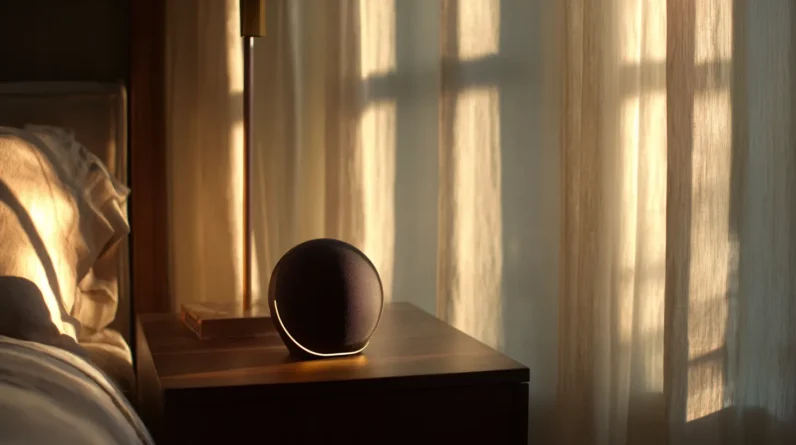
We’re transforming bedroom automation through voice control—eliminating friction between intention and action. You can now orchestrate lighting, temperature, and sound without leaving bed, while AI learns your sleep patterns and triggers predictive routines. Integration extends beyond comfort into entertainment and security, all managed through natural speech. Privacy-first architecture with directional microphones and encrypted data guarantees trust. Strategic placement and biometric authentication create seamless control that respects your sanctuary while safeguarding it. Discover how convergent technologies reshape the modern sleep environment.
The Bedroom Control Problem Voice Solves
When we’re nestled under blankets or our hands are full during morning routines, reaching for a physical remote or smartphone to adjust lighting, temperature, or entertainment feels unnecessarily cumbersome. Voice control eliminates this friction entirely.
We’ve identified a critical gap in bedroom automation: the need for seamless, hands-free operation without compromising privacy or aesthetic design. Traditional interfaces demand interaction, breaking the bedroom’s restorative atmosphere. Voice-activated systems transcend these limitations, enabling us to command our environment through natural speech.
Moreover, we’re leveraging machine learning to establish personalized preferences that anticipate our needs. The system learns our circadian rhythms, preferred temperatures at specific times, and entertainment selections. This intelligence-driven approach transforms the bedroom from a static space into an adaptive environment that responds intuitively to our evolving requirements.
Ambient Control: Lighting, Temperature, and Sound Without Moving
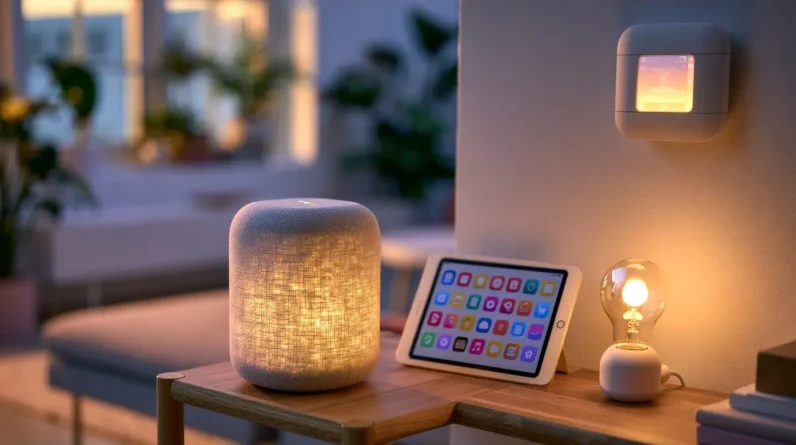
The true promise of voice-activated bedroom design emerges through ambient control—the seamless orchestration of lighting, temperature, and audio that we command without lifting a finger. We’re leveraging AI-driven ecosystems that deliver personalized climate settings tailored to our sleep cycles and preferences. Advanced voice assistants now coordinate circadian lighting that shifts color temperature throughout the evening, signaling our bodies toward rest. Seamless device coordination means our thermostats respond instantly to vocal commands, maintaining ideal sleeping conditions while reducing energy waste. Meanwhile, spatial audio systems create immersive soundscapes—from white noise to nature ambience—all voice-activated. This integration represents the convergence of biohacking and smart home technology, where environmental factors align precisely with our physiological needs through conversational interfaces.
Creating Sleep Routines That Anticipate Your Needs
Beyond manual commands, intelligent sleep systems now learn our patterns and execute routines before we ask. Machine learning algorithms analyze our sleep data, identifying ideal trigger points for environmental adjustments. We’re witnessing circadian rhythm optimization reach new sophistication levels, where voice-activated systems automatically initiate pre-sleep sequences based on detected behaviors.
Advanced platforms now integrate personalized environmental controls that adapt lighting color temperature, white noise profiles, and thermal settings without explicit commands. These systems recognize evening activity patterns—scrolling cessation, movement reduction—and preemptively engage wind-down protocols.
We’re moving beyond reactive automation toward predictive intelligence. Your bedroom’s voice interface doesn’t just respond; it anticipates. This represents a fundamental shift in how we architect sleep environments, leveraging biometric feedback and behavioral data for genuinely personalized rest optimization.
Integration Beyond the Basics: Entertainment and Security
As we’ve optimized our sleep environments, voice-controlled systems are now expanding into entertainment and security functions that transform bedrooms into fully integrated smart spaces. We’re leveraging advanced voice assistants to manage streaming services, adjust ambient lighting for movie nights, and control sound systems—all without disrupting sleep cycles.
Security integration’s equally compelling. We’re implementing customized security alerts that notify us of unusual activity while respecting our rest. Enhanced privacy features guarantee our voice data remains encrypted and compartmentalized. Multi-factor authentication protocols activate when we’re away, while presence-detection algorithms adjust security modes automatically.
We’re witnessing convergence of comfort and protection—voice control’s becoming the central nervous system managing entertainment preferences alongside real-time threat detection. This sophistication demands we comprehend our systems’ capabilities and maintain vigilant oversight.
Designing a Bedroom That Listens: Privacy and Placement Considerations
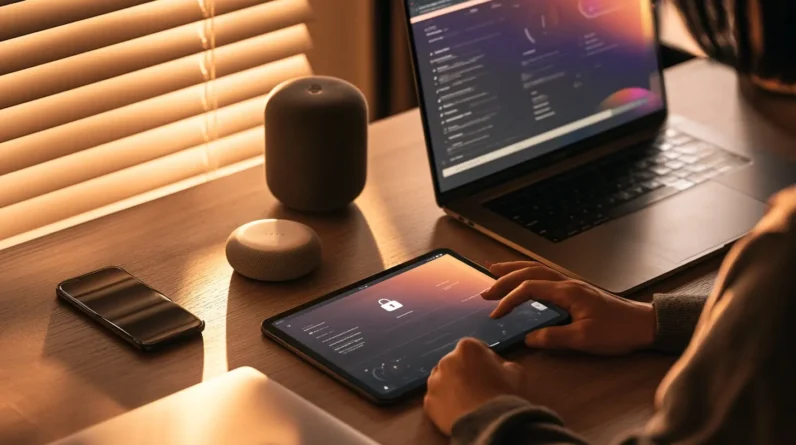
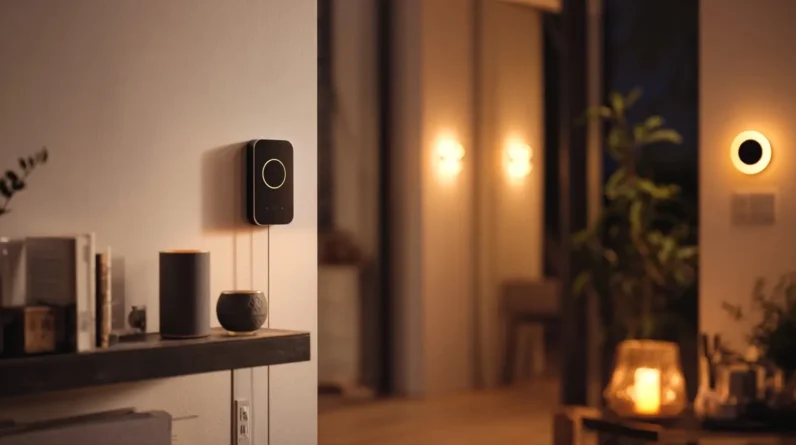
Where we position our voice-controlled devices fundamentally shapes both our privacy architecture and our smart bedroom’s operational effectiveness. Strategic voice assistant placement requires balancing convenience against acoustic vulnerabilities—positioning mics away from bedside conversations guarantees sensitive discussions remain private while maintaining command responsiveness.
We’re leveraging directional microphone arrays and acoustic isolation to minimize ambient capture beyond intended zones. Voice command security demands multi-layered authentication: voice biometrics, device-specific wake words, and encrypted transmission protocols prevent unauthorized access.
We’re implementing bedroom-specific configurations that disable recording during designated hours and isolate devices from master bedroom audio zones. This approach—combining physical placement strategy with encryption architecture—establishes trust while preserving the innovation that makes bedroom voice integration transformative. Mastery here means controlling what’s heard, not just what’s said.
Conclusion
We’re witnessing voice control reshape bedroom automation fundamentally. By eliminating manual interaction, we’re enabling seamless ambient adjustments that prioritize sleep quality and convenience. The convergence of AI-driven routines, integrated smart ecosystems, and privacy-conscious design creates personalized sleep environments that anticipate our needs. As voice technology matures, we’re not just automating spaces—we’re engineering bedrooms that genuinely understand and adapt to our behavioral patterns in real-time.