


Most smart home setups are missing automatic pet feeders, smart irrigation tied to weather data, and digital medication reminders. We also overlook presence detection failures, missing conditional logic, and zero seasonal adjustments — gaps that make routines feel dumb instead of intelligent. Add local-storage cameras, motion sensors with configurable zones, and whole-home energy monitors to genuinely close those blind spots. There’s a lot more to unpack if you keep going.
Smart Home Features Most People Never Think to Add
When building a smart home, most of us focus on the obvious upgrades—smart lights, thermostats, and voice assistants—but we’re leaving serious value on the table by overlooking less obvious features that deliver real convenience and efficiency. Automatic pet feeders maintain feeding schedules without manual intervention. Smart irrigation systems optimize water usage based on real-time weather data. Voice activated lighting eliminates unnecessary switches entirely. Digital medication reminders reduce missed doses through scheduled alerts. Smart air purifiers monitor and respond to indoor air quality automatically. Automated window shades regulate natural light and thermal gain passively. Smart garage doors offer remote access control and entry monitoring from anywhere. These integrations collectively transform a basic setup into a genuinely responsive, intelligent environment worth mastering.
The Automation Gaps That Make Your Setup Feel Incomplete
Even a well-equipped smart home can feel frustratingly manual if we’ve left critical automation gaps in place. Routine customization and seasonal adjustments separate truly intelligent systems from glorified remote controls.
The four gaps that undermine most setups:
- Presence detection failures — automations that don’t distinguish between occupants trigger incorrectly or not at all.
- Missing conditional logic — single-trigger routines ignore time, weather, or mode context entirely.
- No seasonal adjustments — lighting schedules and thermostat curves stay static as daylight and temperature shift.
- Incomplete routine customization — generic defaults replace intentional, behavior-specific triggers that match how we actually live.
Identifying these gaps isn’t optional if we want our setup to operate with genuine intelligence rather than basic scheduling.
Security and Safety Features Your Smart Home Actually Needs
Closing automation gaps makes our smart home more responsive, but a responsive home that isn’t secure creates a different kind of problem. Security isn’t an add-on — it’s foundational infrastructure. We need smart cameras with local storage, not just cloud dependency. Smart locks should integrate with access logs and auto-lock schedules. Security alarms must trigger emergency alerts through multiple channels simultaneously. Motion sensors need configurable sensitivity zones to eliminate false positives. Effective home monitoring combines real-time feeds with intelligent event detection. Fire detection should communicate with our entire device ecosystem, triggering lights and releasing exits automatically. Water leak sensors positioned at appliances, water heaters, and pipe joints catch failures before they become disasters. Layer these systems deliberately, and our home genuinely protects itself.
Energy Monitoring Tools That Pay for Themselves Fast
Once our home is secure, we’re ready to focus on what drains our budget silently: energy waste. Energy monitoring tools deliver real time tracking and usage analytics that expose exactly where efficiency collapses.
Deploy these cost effective solutions strategically:
- Smart plugs with consumption metering — identify phantom loads drawing power 24/7
- Whole-home energy monitors — provide granular home efficiency data at the circuit level
- Smart thermostat integration — synchronizes HVAC behavior with occupancy patterns automatically
- Renewable energy dashboards — track solar production against consumption through user friendly interfaces
These tools implement practical energy saving tips by converting raw data into actionable decisions. Most setups recover hardware costs within 8–14 months. We’re not guessing anymore — we’re optimizing with precision.
How to Connect Everything So It Actually Works Together
Getting all these devices to communicate reliably requires choosing a common protocol foundation before purchasing anything else. We recommend building around Matter, Z-Wave, or Zigbee depending on your hub ecosystem, since device compatibility breaks down fast when manufacturers use proprietary stacks that don’t cross-communicate.
Your network reliability depends heavily on infrastructure decisions most buyers ignore. Dedicate a VLAN specifically to IoT devices, separating them from primary traffic. Use a mesh Wi-Fi system with band steering disabled for smart home nodes, and position your hub centrally to minimize signal degradation.
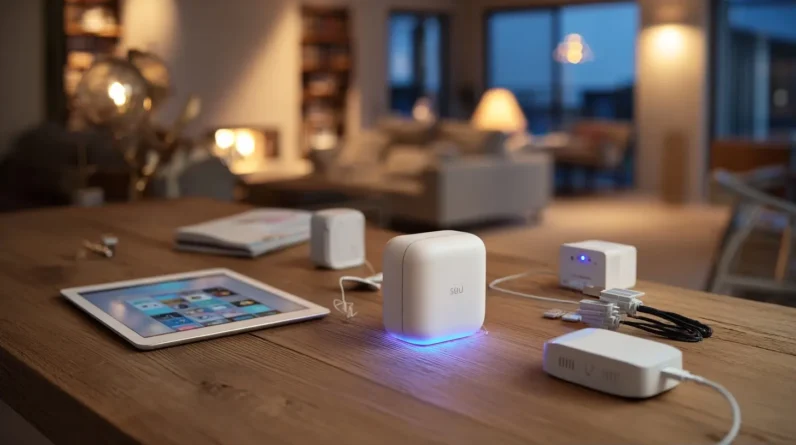
Thread-based devices require a border router—typically a HomePod mini or Nest Hub—to bridge into your broader ecosystem. Without one, those devices operate as isolated endpoints. Map your protocol dependencies before buying anything.
Frequently Asked Questions
Which Smart Home Platforms Offer the Best Long-Term Manufacturer Support and Updates?
We recommend Google Home, Amazon Alexa, and Apple HomeKit for manufacturer longevity and consistent update frequency. These platforms prioritize security patches, firmware rollouts, and ecosystem compatibility—ensuring your smart home investment stays protected and future-ready.
Can Renters Legally Install Smart Home Devices Without Landlord Permission?
Like maneuvering a legal maze, we’ll clarify this: tenant rights vary by jurisdiction, but we generally can’t install permanent smart devices without landlord permission. Always review your lease’s device policy before deploying any hardware modifications.
How Do Smart Home Devices Affect Homeowner’s Insurance Premiums?
Smart home devices can lower your premiums through insurance discounts, as insurers refine their risk assessment using device data. We’re seeing security systems, leak detectors, and smoke monitors drive the most meaningful reductions.
What Happens to Your Smart Home Data if a Company Shuts Down?
When a company shuts down, we risk losing access to our smart home data entirely. Without data portability provisions, company mergers or closures can leave us locked out, making local storage solutions critical safeguards we shouldn’t overlook.
Are Smart Home Devices Safe for Households With Young Children?
While convenience often overshadows security concerns, smart home devices are safe for children when we prioritize child safety features and enable robust device monitoring. We’ll control access, filter content, and set usage boundaries effectively.
Conclusion
We’ve covered the gaps most smart home setups leave wide open, and the fixes aren’t complicated. Studies show that fully integrated smart homes reduce energy costs by up to 30% annually — that’s real money staying in your pocket. Connect your devices intentionally, layer in the security and monitoring tools we’ve outlined, and your system stops being a collection of gadgets and starts functioning like an actual intelligent home.