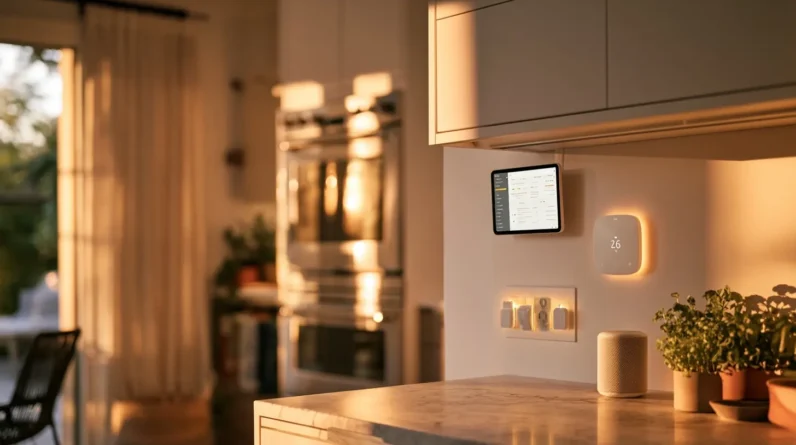



Smart thermostats deliver the strongest returns, cutting heating costs by 10-12% and cooling by 15% annually, with payback periods under two years. Smart irrigation controllers reduce water use by 30-50%, making them another high-value investment. Meanwhile, smart plugs save just $1-$3 monthly per outlet, and smart appliances rarely outperform standard ENERGY STAR models. We’ll show you exactly how to calculate real payback periods and which upgrades consistently justify their upfront costs.
Smart Devices That Actually Cut Your Energy Bill
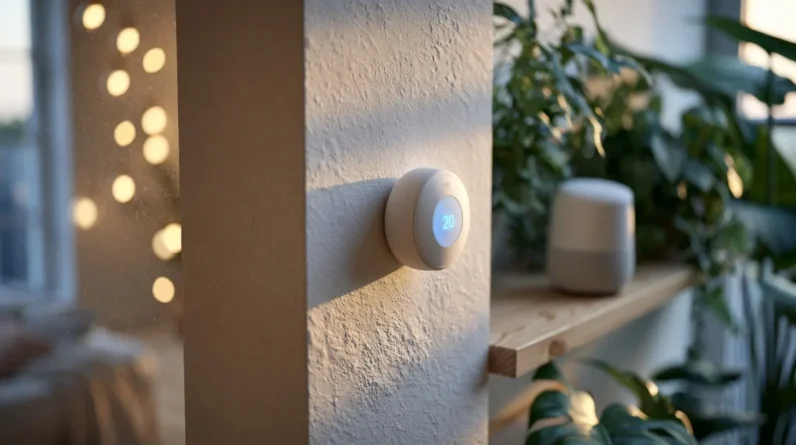
Smart thermostats, smart plugs, and LED lighting systems with automated controls consistently deliver the highest measurable returns on energy investment. Smart thermostats benefits include 10–12% savings on heating and 15% on cooling annually, according to EPA data. We’re looking at payback periods under two years for most households. Energy efficient appliances paired with smart plugs eliminate phantom loads, which account for roughly 10% of residential electricity consumption. When we integrate occupancy sensors with automated LED systems, lighting energy drops by up to 45%. The pattern is clear: devices that actively monitor, adjust, and eliminate waste outperform passive efficiency upgrades. Prioritize devices with verified ENERGY STAR ratings and real-time consumption data — that’s where measurable, compounding savings actually originate.
Which Smart Devices Rarely Pay for Themselves
Not every smart device delivers a return that justifies its upfront cost. Smart plugs, for instance, typically save $1–$3 monthly per outlet, meaning your initial investment rarely recovers within a reasonable timeframe. Smart lighting systems with full hub configurations can run $200–$500, yet energy savings average only $50–$100 annually. Similarly, smart refrigerators and ovens integrate connectivity features that don’t meaningfully reduce consumption compared to standard ENERGY STAR models. Robot vacuums consume comparable electricity to conventional vacuums while adding significant purchase costs. We consistently find that devices positioned as efficiency tools but primarily delivering convenience rarely generate long term savings sufficient to offset acquisition costs. Before purchasing, calculate your actual payback period using real consumption data rather than manufacturer projections.
How to Calculate Your Real Savings Before You Buy
Before committing to any smart device purchase, we recommend running a straightforward payback calculation using three real numbers: your current energy consumption for the appliance category, the device’s verified consumption reduction (not manufacturer claims), and your local utility rate per kWh. Multiply annual kWh saved by your utility rate to get yearly savings, then divide the device’s purchase price by that figure to determine your payback period in years.
Use a dedicated savings calculator to stress-test assumptions across rate fluctuations and seasonal variables. Conduct a thorough usage analysis by pulling 12 months of actual utility data—not estimates. If the payback period exceeds five years, the device likely won’t deliver meaningful financial returns. Hard numbers eliminate guesswork and expose devices that generate marketing value rather than measurable savings.
Setup Mistakes That Kill Smart Device Efficiency
Even a device with a verified two-year payback period can underperform by 30–50% if it’s configured incorrectly out of the box. Network issues like weak Wi-Fi signals force devices into polling loops that spike idle energy consumption. Improper placement of thermostats near heat sources skews sensor readings, triggering unnecessary HVAC cycles. Outdated firmware disables manufacturer-optimized efficiency algorithms that can account for 15–20% of projected savings. User habits compound these losses—overriding automation schedules more than twice weekly effectively eliminates adaptive learning. We recommend auditing placement against manufacturer specifications, enforcing automatic firmware updates, and reviewing override logs monthly. Every misconfiguration has a measurable cost. Treating setup as a precision task rather than a plug-and-play formality is what separates actual savings from theoretical ones.
When Smart Home Upgrades Are Worth the Upfront Cost
Smart home upgrades justify their upfront cost when the payback period falls within the device’s reliable operating lifespan—typically 5–10 years for most categories. We treat every purchase as a long term investment, running a rigorous cost benefit analysis before committing. Smart thermostats averaging $150–$250 installed deliver $131–$145 in annual savings, yielding payback in roughly 12–18 months—well inside their 10-year lifespan. Smart irrigation controllers show similar math: 30–50% water reduction against a $200–$300 upfront cost. Conversely, smart plugs on low-draw devices rarely recover their cost meaningfully. We prioritize upgrades targeting your home’s highest-consumption systems—HVAC, water heating, and irrigation. When savings outpace depreciation within the first third of a device’s lifespan, the investment clears every financial threshold worth tracking.
Frequently Asked Questions
Do Smart Devices Still Save Money During a Power Outage?
No, we don’t save money during outages—smart devices can’t optimize without power. However, we minimize outage impact through faster power restoration alerts and data logging that resumes efficient energy management immediately once power’s restored.
Can Renters Benefit From Smart Device Energy Savings Like Homeowners?
Like seeds in rented soil, we can still grow savings. Renters benefit from smart device energy management through reduced utility bills—data shows 10–15% savings, proving renter benefits mirror homeowners’ when we control consumption directly.
Are Older Homes Compatible With Modern Smart Energy-Saving Devices?
Yes, older homes can accommodate modern smart devices, though we’ll encounter installation challenges like outdated wiring. We recommend prioritizing plug-and-play solutions first, as they’ll deliver energy efficiency gains without requiring costly electrical upgrades.
Do Smart Devices Collect Personal Data While Monitoring Your Energy Usage?
Yes, smart devices collect personal data during energy analytics monitoring. We must review smart device settings to manage user consent, guarantee data security, and maintain monitoring accuracy while protecting our data privacy rights.
Can Smart Devices Work Efficiently Without a Stable Internet Connection?
“A chain is only as strong as its weakest link.” We’ll find that smart device limitations increase offline; however, basic offline functionality—like scheduled automation—still operates, maintaining ~60-70% efficiency without stable internet connectivity.
Conclusion
We’ve walked you through the numbers, the traps, and the genuine wins. Now you’re standing at a crossroads: every device on your shelf is either silently draining your wallet or actively protecting it. The difference? Data. Track your baseline consumption, calculate real payback periods, and configure devices correctly from day one. One wrong setup decision compounds into hundreds of wasted dollars annually. Your smart home should work for you—not against you.