


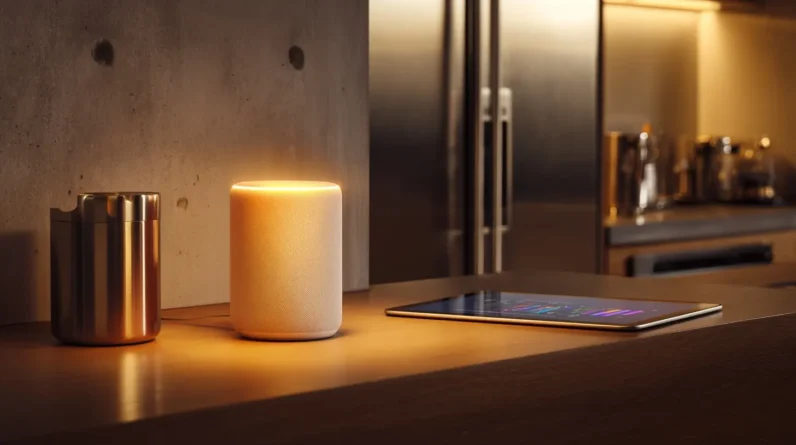
Not all smart home devices deliver equal value, and we’ve found that five core features reveal the difference. Compatibility across protocols like Matter, Zigbee, and Z-Wave determines how well devices communicate. Security standards, particularly AES-256 encryption, protect your data. Reliability separates devices that perform consistently from those that frustrate. Setup complexity and usability define your daily experience. Price alone won’t guide you — but understanding these features will.
Why Compatibility and Ecosystem Support Define the Experience
When building a smart home, compatibility and ecosystem support aren’t optional considerations—they’re the foundation that determines whether your devices work as a cohesive system or a fragmented collection of apps and workarounds. Ecosystem integration dictates how seamlessly your thermostat communicates with your lighting, locks, and security cameras under a unified platform. We evaluate devices not just on standalone performance but on their ability to support robust device interconnectivity across protocols like Matter, Zigbee, and Z-Wave. A device locked into a proprietary ecosystem limits scalability and forces compromises. The strongest smart home setups leverage platforms—Google Home, Amazon Alexa, Apple HomeKit—that support cross-brand communication and automation layering. Before purchasing, verify protocol compatibility, third-party integrations, and long-term vendor support. These factors separate genuinely capable smart home devices from expensive, isolated gadgets.
The Smart Home Features That Actually Earn Their Price Tag
Once compatibility and ecosystem support establish the foundation, the next honest question becomes whether a device’s feature set justifies its cost. We evaluate smart home hardware against two non-negotiable benchmarks: energy efficiency and user customization.
Energy efficiency separates genuinely intelligent devices from expensive novelties. A thermostat that learns occupancy patterns and reduces consumption meaningfully earns its premium. One that simply schedules temperature changes doesn’t.
User customization determines long-term value. Devices offering granular control — adjustable automation triggers, conditional logic, personalized scenes — adapt to evolving household needs rather than forcing behavioral compromise.
We’ve found that devices commanding higher price points typically deliver both capabilities simultaneously. That convergence isn’t coincidental; manufacturers investing in true intelligence build systems that reduce operational costs while expanding user control over time.
Security and Privacy Standards Most Buyers Overlook
Energy efficiency and customization matter little if a device becomes a surveillance liability or an entry point for network intrusion. We evaluate security by examining data encryption standards — AES-256 remains the benchmark — alongside robust device authentication protocols that prevent unauthorized access. Weak or absent encryption exposes household data to interception. We also scrutinize user permissions carefully; granular controls let us limit what data each device collects and shares. Too many devices default to maximum data harvesting unless we manually restrict them. Privacy policies deserve equal attention — we look for transparent, plain-language disclosures that specify data retention periods, third-party sharing practices, and deletion rights. Devices that obscure these details or bury consent language in lengthy agreements signal that the manufacturer prioritizes data monetization over user protection.
How Reliability Separates Great Devices From Frustrating Ones
Security standards protect our data, but a device that drops connections, freezes, or requires constant reboots fails us in an entirely different way. Reliability determines whether a smart home enhances daily life or creates friction at every turn.
We evaluate reliability through two lenses: performance consistency and device longevity. Performance consistency means the device executes commands accurately, responds within acceptable latency thresholds, and maintains stable network connections under load. Device longevity means the hardware and firmware hold up across years of continuous operation, not just the first few months.
Look for manufacturers who publish uptime metrics, maintain active firmware update cycles, and back products with warranties exceeding one year. These commitments signal engineering discipline. Devices without that track record will cost us more in replacements and frustration than we initially save.
The Setup and Usability Factors Worth Checking Before You Buy
Everything about a smart device’s long-term value hinges on how quickly we can get it running and how intuitively we can operate it day to day. Installation challenges and a clunky user interface can erode even the most feature-rich device’s appeal fast.
Before purchasing, evaluate these critical usability factors:
- Onboarding complexity — count the required steps from unboxing to full functionality
- App design quality — assess whether the user interface surfaces controls logically
- Installation challenges — confirm wiring, hub, or mounting requirements match your skill level
- Voice assistant compatibility — verify native support without workarounds
- Firmware update process — determine whether updates deploy automatically or demand manual intervention
Devices that minimize friction during setup and daily operation consistently outperform technically superior competitors that frustrate users at every interaction point.
Frequently Asked Questions
Which Smart Home Brands Offer the Longest Product Warranties Available?
We’ve found that Lutron, Leviton, and Ecobee lead our warranty comparison, offering the strongest product longevity guarantees—up to five years—making them top contenders when you’re evaluating smart home investments for long-term reliability.
Can Smart Home Devices Negatively Impact Your Home’s Resale Value?
Yes, smart home devices can negatively impact resale value if they don’t align with buyer preferences. We’ve seen market trends reveal that outdated, proprietary, or poorly integrated systems deter buyers, reducing perceived value rather than enhancing it.
Are Smart Home Devices Covered Under Standard Homeowner’s Insurance Policies?
Like traversing a minefield, smart home insurance isn’t straightforward. Standard policies don’t automatically cover your devices—we’re seeing significant coverage limitations that require riders or specialized endorsements to protect your connected ecosystem adequately.
How Do Smart Home Devices Perform During Extended Power Outages?
Most smart home devices fail during extended power outages without battery backup or generator integration. We recommend you prioritize systems with built-in power backup capabilities and assess each device’s outage readiness before committing to any smart home ecosystem.
Do Smart Home Devices Require Professional Installation to Function Optimally?
Most smart home devices don’t require professional installation, but installation complexity varies notably. We recommend evaluating each device’s user experience carefully—simpler setups optimize performance, while complex integrations benefit from professional expertise to guarantee seamless, reliable functionality.
Conclusion
We’ve covered a lot of ground, and the takeaway is clear: not every device wearing a “smart” label actually delivers intelligence worth trusting. Think of your smart home as a chain — compatibility, security, reliability, and usability are its links, and one weak connection breaks the entire system. Before you spend another dollar, measure each device against these standards. The right choices don’t just automate your home; they genuinely transform it.