


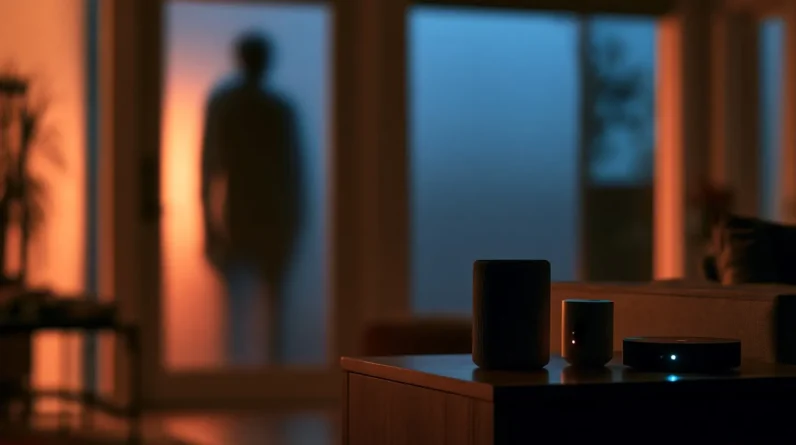
When guests connect to our Wi-Fi, their devices share the same subnet as our smart cameras, speakers, and wearables. That flat network architecture means one compromised guest device can exploit everything alongside it. Protocols like mDNS, UPnP, and SMB make lateral movement surprisingly easy. We can neutralize this by enabling a guest network with client isolation and disabling UPnP on guest-accessible segments. The full protection strategy goes deeper than most homeowners realize.
Why Guest Devices Are Your Smart Home’s Weakest Link
When a friend connects their smartphone to your home network, they unknowingly introduce every vulnerability on their device into your environment. Outdated operating systems, unpatched applications, and compromised credentials all travel with that device the moment it authenticates to your router.
Here’s what makes guest devices particularly dangerous: they receive identical network privileges as your smart thermostat, security cameras, and door locks. One infected device can laterally traverse your entire network infrastructure, exploiting device vulnerabilities across every connected endpoint.
We can’t control what’s running on someone else’s hardware. What we can control is network security architecture—specifically, how much access we grant to unknown devices. Understanding this attack surface is the prerequisite to building any meaningful defense around your smart home ecosystem.
What Houseguests Can Actually Access on Your Network
Understanding the threat guest devices pose is only half the equation—we also need to map exactly what those devices can reach once they’re on our network. By default, most routers place every connected device on the same subnet, meaning a guest’s smartphone sits alongside your NAS drive, smart locks, security cameras, and thermostat. That flat network architecture creates a network vulnerability where unauthorized access to one device becomes a pivot point to everything else. Through standard protocols like mDNS, UPnP, and SMB, guest devices can discover and interact with shared resources without any active exploitation required. They’re not hacking in—they’re simply browsing what your network freely advertises. Recognizing this exposure defines the problem we’re solving.
Set Up a Guest Network That Protects Your Smart Devices
The fix starts at your router’s admin panel, where enabling a guest network creates a logically separate broadcast domain that keeps visitor devices off your primary subnet entirely. Assign your smart devices exclusively to the primary network, then push every houseguest onto the isolated guest network. Enable client isolation within the guest network settings to prevent lateral movement between connected visitor devices. For stronger access control, implement MAC address filtering and set bandwidth caps to limit exposure. Most modern routers supporting WPA3 will encrypt guest traffic independently, reinforcing IoT security without manual intervention. Disable UPnP on both networks, and audit connected devices weekly. This architecture guarantees your smart devices never share a broadcast domain with untrusted endpoints, closing the vulnerability we outlined in the previous section.
Which Smart Devices Face the Highest Risk From Shared Wi-Fi?
Not all smart devices carry equal exposure when sharing a Wi-Fi network with untrusted endpoints. Devices transmitting sensitive data streams or lacking firmware update mechanisms present disproportionate attack surfaces.
| Device Type | Primary Risk Vector |
|---|---|
| Smart cameras | Unencrypted video stream interception |
| Internet refrigerators | Credential harvesting via weak authentication |
| Connected speakers | Passive audio surveillance through ARP poisoning |
Wearable devices compound exposure differently—they sync biometric data across shared networks, creating lateral movement opportunities for attackers who’ve already compromised another endpoint.
We recommend prioritizing isolation for smart cameras and connected speakers first, as both transmit continuous data streams rather than periodic packets. Internet refrigerators and wearable devices warrant secondary isolation, primarily because their authentication protocols remain historically underdeveloped compared to mature consumer electronics.
Simple Rules to Give Guests Access Without Giving Up Security
Managing guest access introduces competing priorities—hospitality demands open connectivity while security requires strict boundary enforcement. We recommend implementing these systematic protocols to maintain security balance without sacrificing usability:
- Activate guest network isolation immediately—this prevents lateral movement between devices.
- Generate temporary access credentials using WPA3, rotating passwords after each guest departure.
- Set bandwidth throttling on guest networks, limiting exposure to resource-exhaustion attacks.
- Disable UPnP on guest-accessible segments to prevent unauthorized port-forwarding exploits.
- Configure time-based access rules that automatically expire temporary access windows.
- Audit connected devices after every guest session, removing unrecognized MAC addresses promptly.
These aren’t optional refinements—they’re foundational requirements. Treating guest connectivity as a controlled, temporary access event rather than an open invitation fundamentally restructures your threat surface.
Frequently Asked Questions
Can a Houseguest Accidentally Disable My Smart Home Devices Entirely?
Yes, a houseguest can accidentally disable your devices entirely if you haven’t locked down houseguest permissions. We’ve seen device vulnerabilities exploited through factory resets, incorrect configurations, and unintentional voice commands that permanently alter critical system settings.
What Happens to My Smart Home Data After Guests Leave My Network?
Like digital footprints in snow, guest access leaves data traces we can’t easily erase—device vulnerabilities, network security logs, and data privacy records persist. We must audit, revoke credentials, and purge residual guest data systematically.
Do Smart Devices Store Logs of Every Device That Connects Nearby?
Many smart devices do log nearby connections, creating device privacy risks. We recommend auditing your router’s network security settings regularly, as some hubs retain MAC addresses, connection timestamps, and signal data indefinitely without user awareness.
Can Guests Trigger Smart Home Routines Without Realizing They’re Doing It?
Like Pandora’s box, yes—guest interactions can unknowingly trigger routine triggers through proximity sensors, voice activation, or motion detection. We must audit device awareness settings and address privacy concerns by restricting guest-accessible automations within your hub’s permission controls.
Should I Change My Smart Home Passwords After Every Houseguest Visit?
We don’t recommend changing passwords after every visit—instead, implement structured guest protocols. Rotate credentials quarterly and revoke guest network access immediately post-visit. Solid password management means isolating guests rather than constantly resetting your core credentials.
Conclusion
We’ve covered a lot of ground, but here’s the number that should stick with you: 70% of smart home breaches originate from compromised guest access points. That’s not a coincidence—it’s a structural vulnerability we keep ignoring. By segmenting networks, auditing device permissions, and enforcing strict guest protocols, we’re not just protecting our smart devices. We’re closing the exact gap attackers consistently exploit first.