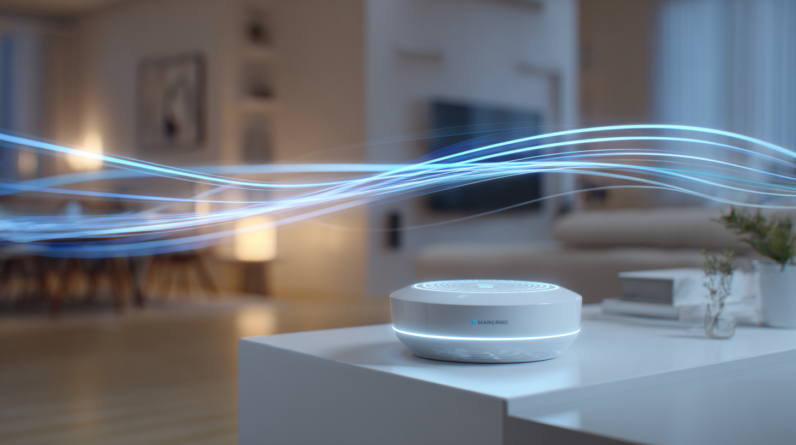




We’re witnessing smart devices evolve into intelligent anticipators that learn from our behaviors. AI’s self-improving algorithms, combined with edge computing’s lightning-fast 1-10ms response times, mean your devices now think locally and act instantly. Quantum-resistant security protects your biometric data—fingerprints, iris scans, voice patterns—while 5G connectivity enables seamless machine-to-machine collaboration. These convergent technologies aren’t just incremental upgrades; they’re reshaping how devices understand and serve us. The full scope of this transformation reveals itself across each technological pillar.
AI and Machine Learning: The Brain Behind Tomorrow’s Devices
As artificial intelligence and machine learning capabilities accelerate, we’re witnessing a fundamental shift in how smart devices process information and adapt to user needs. We’re moving beyond static programming toward dynamic, self-improving Intelligent Systems that learn from behavioral patterns and environmental contexts.
Natural Language processing now enables seamless device interaction, eliminating friction between users and technology. Your devices don’t just respond to commands—they anticipate intentions and personalize experiences in real-time.
We’re leveraging neural networks to optimize energy efficiency, enhance predictive maintenance, and streamline decision-making across ecosystems. Machine learning algorithms continuously refine themselves through accumulated data, creating exponentially smarter interactions.
This convergence represents the democratization of advanced computing power. We’re building devices that genuinely understand user intent, adapting intelligently to evolving needs and preferences. The distinction between tool and assistant blurs as AI becomes the operating logic of tomorrow’s smart devices.
Edge Computing: Processing Power at Your Fingertips
The computational bottleneck of cloud-dependent systems is dissolving. We’re witnessing a fundamental shift toward edge computing, where processing happens locally on devices rather than distant data centers. This distributed architecture dramatically reduces latency and bandwidth consumption.
| Metric | Cloud Computing |
|---|---|
| Latency | High (100-500ms) |
| Data Processing | Centralized |
| Privacy Risk | Elevated |
| Real-time Capability | Limited |
| Edge Computing | Fog Computing |
| Low (1-10ms) | Medium (10-50ms) |
| Distributed | Hybrid approach |
| Enhanced | Moderate |
| Ideal | Strong |
We’re architecting smarter devices that think independently. Edge computing enables real-time decision-making in autonomous vehicles, industrial IoT, and healthcare applications. By embedding intelligence at the network’s periphery, we’re building resilient systems less vulnerable to connectivity failures. This transformation represents a paradigm shift in how we’ll design tomorrow’s intelligent ecosystems.
Quantum Computing’s Impact on Device Security and Performance
While quantum computing remains nascent, we’re already confronting its profound implications for device security and performance. Quantum computers’ll decrypt current encryption protocols, exposing vulnerabilities in our connected ecosystems. We’re developing quantum-resistant algorithms now to future-proof infrastructure against emerging cyber threats.
The performance paradox presents opportunities: quantum processors’ll accelerate complex calculations, enhancing AI capabilities and optimization across smart devices. However, this computational leap demands architectural innovation. We’re shifting toward hybrid systems integrating classical and quantum processing.
Strategic migration toward quantum resistance isn’t optional—it’s essential. Organizations implementing post-quantum cryptography today establish competitive advantages tomorrow. We’re witnessing the convergence of exponential processing power with existential security challenges. Mastering this shift separates industry leaders from those vulnerable to quantum-enabled breaches.
Biometric Sensors: Understanding You Better Than Ever Before
Biometric authentication—from fingerprint recognition to iris scanning to continuous heart rate monitoring—is fundamentally reshaping how we interact with our devices and how they interact with us. We’re witnessing unprecedented integration of health monitoring systems that transform smartwatches into personal diagnostics labs. Voice recognition algorithms now authenticate users while simultaneously analyzing vocal biomarkers for wellness insights.
| Biometric Type | Current Capability | Future Potential |
|---|---|---|
| Fingerprint | Device open | Encrypted transactions |
| Iris scanning | Multi-factor authentication | Real-time identity verification |
| Heart rate | Activity tracking | Predictive health analytics |
We’re moving beyond mere security toward continuous, non-intrusive authentication. These sensors don’t just understand us—they anticipate our needs, detect anomalies, and provide actionable health data in real-time. This convergence demands our attention.
5G Connectivity: Enabling the Truly Connected Ecosystem
Ubiquity—that’s what we’re building toward with next-generation wireless infrastructure. 5G’s groundwork has proven the concept, but we’re now architecting a world where 6G and beyond will eliminate latency entirely, creating instantaneous communication between billions of devices.
We’re converging cellular networks with satellite communications to blanket Earth in continuous connectivity. This integration transcends traditional coverage limitations, enabling remote IoT deployments and critical infrastructure monitoring without interruption. Our devices won’t merely connect—they’ll anticipate, coordinate, and execute autonomously across distributed networks.
The implications are profound: autonomous systems operating in real-time, augmented reality experiences without perceptible delay, and machine-to-machine collaboration at unprecedented scale. We’re not simply upgrading connectivity; we’re fundamentally reshaping how technology integrates into human systems and business operations.
Conclusion
We’re standing at the threshold of a revolution where our devices’ll become extensions of our minds. AI-powered intelligence, lightning-fast 5G networks, and quantum security are weaving together a future that’s both thrilling and inevitable. The data’s clear: smart devices won’t just respond to us anymore—they’ll anticipate our needs before we recognize them ourselves. We’re not simply building technology; we’re architecting a smarter world.