


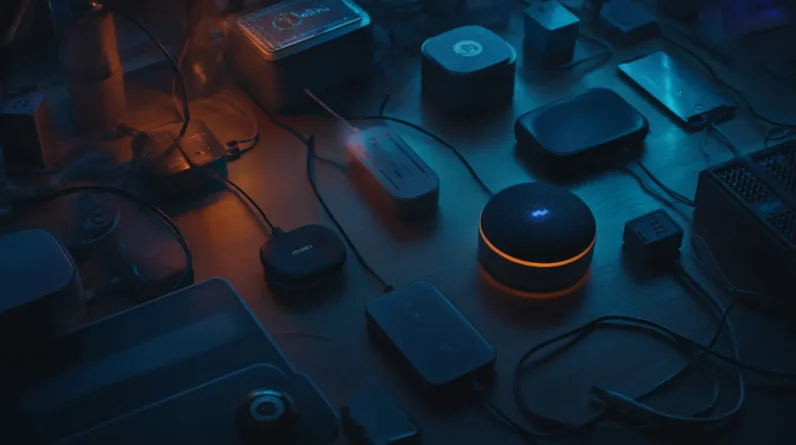
We’re caught between two forces: energy vampires draining 23% of our electricity through continuous standby consumption, and smart devices that slash HVAC usage—our biggest load—by 30%. Smart thermostats use virtually no power while orchestrating massive heating and cooling savings. LED lighting with motion sensors cuts consumption 40-87%. Real-time monitoring exposes waste patterns, transforming awareness into behavioral change. The math is compelling, but understanding where your specific dollars disappear reveals the real optimization potential.
The Power Draw of Smart Thermostats and Hubs
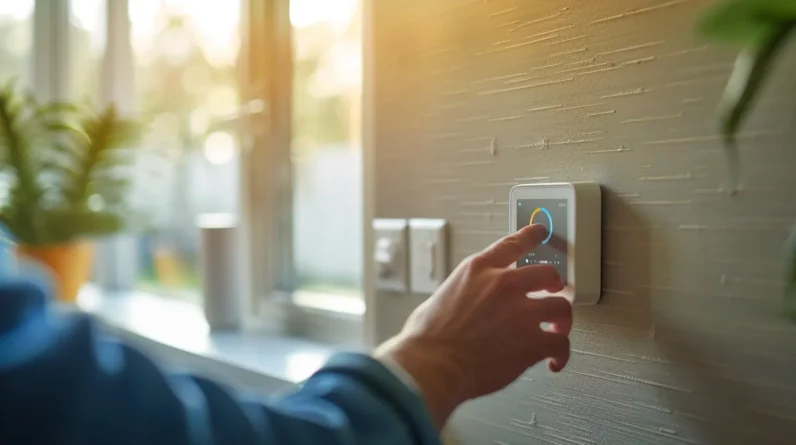
When we examine smart thermostat efficiency, we’re looking at devices engineered to minimize their own energy footprint while maximizing HVAC savings. ENERGY STAR-certified models limit network standby consumption to 3.0 watts or less, entering low-power states within five minutes of user interaction. This minimal draw—negligible compared to the HVAC systems they control—becomes irrelevant when we consider their energy efficiency impact. Static temperature accuracy within ±2.0°F prevents unnecessary system cycling and excess power consumption. Through adaptive learning and weather integration, smart thermostats maintain consistently low idle power. The result: devices that consume virtually nothing while orchestrating substantial reductions in heating and cooling runtime, delivering the energy efficiency gains that justify their installation across residential infrastructure.
Understanding Continuous Energy Consumption Across Your Home
Energy vampires—devices that run continuously or remain in standby mode—drain roughly 23% of our residential electricity, costing the average U.S. household approximately $308 annually. We’re talking about cable boxes consuming 20-50 watts continuously, computer equipment drawing 5-25 watts in standby, and smart devices pulling 3-15 watts each.
Strategic device management reveals where our consumption concentrates. Homes with 15+ consumer electronics show quadrupled always-on usage, particularly in high-energy households with aquariums and pool pumps. Real-time monitoring tracks these patterns across categories, exposing waste opportunities.
We can reclaim significant energy efficiency gains through targeted interventions. Plug loads alone offer up to 50% savings potential. By understanding our continuous consumption patterns and managing devices intelligently, we’ll identify actionable strategies for meaningful household reductions.
Lighting and Plug Load Optimization Opportunities
Now that we’ve identified where continuous energy drain concentrates in our homes, we can tackle two interconnected opportunities that collectively offer substantial savings: lighting and plug loads.
| Technology | Energy Savings |
|---|---|
| LED + smart controls | 35-70% reduction |
| Motion sensors alone | 40% savings |
| Daylight harvesting systems | 87% potential decrease |
| Plug load optimization | 5-22% utility reduction |
We’re leveraging daylight harvesting to minimize artificial illumination during peak daylight hours, while motion sensors activate lighting only during occupancy. Smart dimmers and programmable schedules amplify these gains when paired with LED bulbs.
Simultaneously, energy optimization through smart plug management addresses phantom loads and standby consumption across our device ecosystem. Smart appliances reduce household energy costs by 2-9%, while thorough monitoring systems identify unnecessary drain.
These synergistic strategies generate compound savings exceeding individual implementations alone.
HVAC Systems: Where Smart Technology Makes the Biggest Impact
HVAC systems represent the heavyweight champion of household and commercial energy consumption, typically accounting for 40-50% of a building’s total energy usage—which makes them the ideal target for smart optimization. We’re achieving 20-30% energy reductions in industrial settings through IoT sensors and machine learning algorithms that adjust operations in real-time based on occupancy and temperature data. Energy Efficiency gains accelerate through peak load shaving, which pre-conditions spaces during off-peak hours, avoiding costly demand charges. System Optimization extends equipment lifespan via predictive maintenance, detecting component failures before they occur. Smart thermostats alone deliver 8-10% annual savings, while ENERGY STAR-certified systems reach 30%. By 2030, wireless-connected smart HVAC adoption will surpass 55%, fundamentally reshaping how facilities manage their largest energy expense.
Real-Time Monitoring and Its Effect on User Behavior
While HVAC systems deliver substantial energy savings through automation, we’re discovering that the real multiplier effect comes from empowering users with visibility into their consumption patterns.
Real-time dashboards transform energy awareness into actionable behavioral change. When we monitor live consumption data, we’re not just observing—we’re optimizing. Here’s what shifts:
- Immediate device identification: We pinpoint which appliances drain resources fastest
- Peak load management: We stagger simultaneous operations, reducing demand charges by up to 15%
- Pattern recognition: Historical data reveals inefficiencies we’d otherwise miss
- Engagement acceleration: Household members armed with granular insights demonstrate sustained conservation habits
The 89% accuracy in appliance-level tracking provides us reliable intelligence for decision-making. Anomaly notifications prompt investigation, while cost visualization reinforces consequences. We’re not sacrificing convenience—we’re systematizing efficiency through data-driven awareness.
Quantifying Your Savings: What Smart Homes Actually Deliver
The numbers tell a compelling story: smart homes deliver 10-30% overall energy reductions, with thorough systems reaching 30-40% when properly optimized. We’re seeing tangible financial returns: households realize $1,500-$3,000 annually through utility bill reductions. Smart thermostats alone contribute 12-26% heating and cooling savings, translating to $50+ per billing cycle.
For cost optimization, consider payback timelines. Smart thermostats recover investments in 1-3 years; exhaustive systems in 2.5 years with 400% ROI over a decade. Smart plugs achieve 567% ROI at 1.8-year payback.
Energy auditing reveals HVAC systems represent 44% of energy savings potential in developed markets. Federal tax credits up to 30% further improve economics. We’re not speculating—we’re quantifying measurable returns.
The Global Picture: Network Standby and Future Energy Trends
As we’ve quantified the financial returns of individual smart home investments, we’re now witnessing those isolated gains aggregate into a transformative global movement. Over one billion AER-enabled devices now optimize energy consumption worldwide, positioning smart technology at the infrastructure’s core.
The trajectory’s staggering:
- Global energy-efficient device market expanding from $1.1 trillion to $1.9 trillion by 2029
- Smart home energy monitoring expanding 17.2% annually through 2033
- Smart energy infrastructure reaching $338 billion by 2033
- AER technology preventing three billion tonnes of CO2 annually by 2030—approximately 8% of global emissions
This Global Adoption represents twice Netflix and Amazon Prime’s combined subscribers. We’re witnessing Energy Efficiency transcend individual savings into systemic decarbonization. Regional grid operators now release marginal emissions datasets, enabling real-time optimization across interconnected networks that increasingly prioritize renewable integration while maintaining stability.
Conclusion
We’ve discovered that smart devices function like a double-edged sword—they’ll slash your energy consumption when properly deployed, yet drain power continuously through standby modes and hub operations. Your real savings materialize through HVAC optimization and behavioral shifts via real-time monitoring. We’re witnessing network standby losses globally, but strategic device selection and configuration deliver measurable returns. You’ll maximize efficiency by prioritizing high-impact systems over thorough automation.