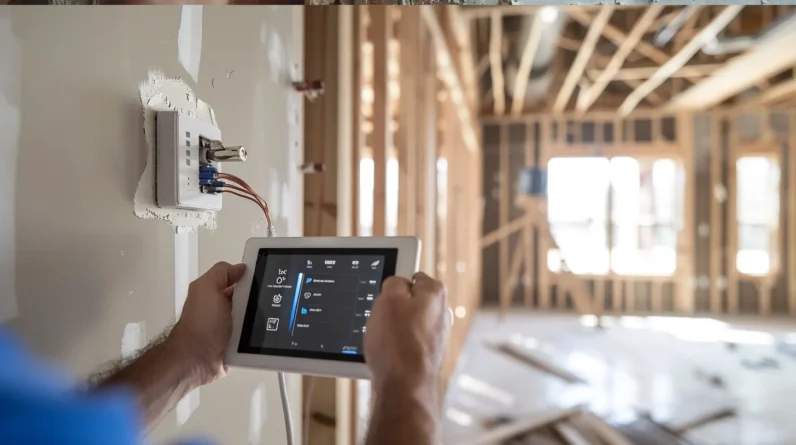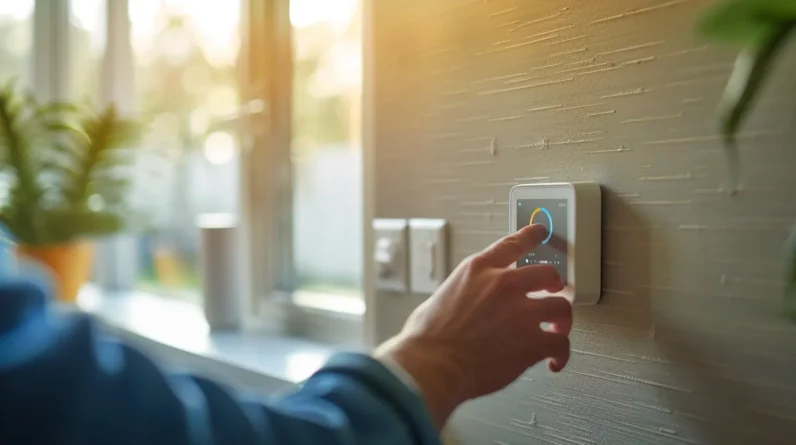




We’re balancing two competing smart home priorities: AI systems deliver up to 25% energy savings through automated optimization, while simultaneously enabling convenience through remote control and autonomous task execution. The paradox? Systems engineered for efficiency often increase usage through ease of access. Most households recoup $2,000–$6,000 initial investments within 8–24 months via energy reductions and rental premiums. Understanding how to align these priorities with your specific needs reveals strategies that don’t force compromise.
The Rise of AI-Driven Automation in Modern Homes
As artificial intelligence reshapes residential living, we’re witnessing unprecedented market expansion driven by technological breakthroughs and consumer adoption. The global AI in home automation market’s projected growth from $20.51 billion in 2024 to $75.16 billion by 2029—a 29.65% CAGR—reflects accelerating demand for intelligent systems. AI advancements in natural language processing, expanding at 37.90% CAGR, enable voice assistants achieving 95% accuracy, reducing false triggers substantially. Device integration through Matter 1.2 protocol adoption at 40% in 2025 facilitates seamless interoperability across smart locks, thermostats, and security systems. Predictive capabilities analyze household usage patterns, optimizing operations in real-time. Edge computing integration cuts latency by 15-18%, diminishing cloud reliance. North America dominates with 38.66% market share, while Asia-Pacific leads regional growth at 35.58% CAGR.
Energy Efficiency Gains That Save Money and the Planet
While AI-driven automation establishes operational efficiency, the true value emerges through quantifiable energy and financial gains. We’re witnessing substantial Energy Savings across residential sectors—smart thermostats deliver up to 22% heating reductions and 17% cooling decreases. AI-optimized systems achieved 16-25% savings depending on geography and solar integration.
These Energy Savings translate directly: HERS-rated homes save $1,100 annually, while national appliance standards provide $500 yearly household reductions. The Eco Benefits extend equally compelling. Residential buildings currently generate 22% of energy-related greenhouse gas emissions, yet strategic optimization through real-time AI adjustments substantially reduces carbon footprints. Combined with tripling heat pump adoption and 69% solar capacity growth since 2020, we’re systematically decoupling residential energy consumption from environmental degradation while strengthening household economics.
Convenience Features That Transform Daily Living
Beyond the quantifiable energy savings and environmental benefits that smart home systems deliver, we’re experiencing a fundamental shift in how residents interact with their living spaces. Smart appliances now execute complex tasks autonomously—refrigerators track expiration dates, washing machines schedule cycles remotely, and coffee makers activate before we arrive home. Voice assistants orchestrate multi-device routines simultaneously, eliminating sequential manual operations. Remote access to thermostats, locks, and lighting systems grants unprecedented control across distributed locations. These capabilities fundamentally restructure daily workflows, reducing cognitive load and time allocation toward household management. Home comfort optimization occurs through automated climate adjustments, circadian rhythm-aligned lighting, and occupancy-based environmental calibration. We’re witnessing systematic integration that translates technological infrastructure directly into measurable lifestyle enhancement and operational efficiency gains.
Market Growth and Adoption Trends
The smart home market’s trajectory demonstrates unprecedented acceleration, with global valuations climbing from USD 147.52 billion in 2025 to USD 633.20 billion by 2032—a compound annual growth rate of 23.1% that underscores the sector’s expanding market penetration. We’re witnessing adoption rates surge dramatically, with household penetration reaching 77.6% by 2025 and climbing to 92.5% by 2029. Market trends reveal that over 57% of US households will possess at least one smart device by 2025, while globally 726.7 million users emerge. The average smart home contains 15-20 connected devices, signaling sustained consumer commitment. North America commands 32.24% market share, though Asia-Pacific grows fastest at 16.5% CAGR, driven by urbanization and infrastructure development.
The Cost-Benefit Analysis of Smart Home Investment
As smart home adoption accelerates across markets, we must evaluate whether the investment justifies the financial commitment. Our analysis reveals compelling investment returns and cost savings that warrant serious consideration.
| Investment Category | Financial Outcome |
|---|---|
| Initial Setup Cost | $2,000–$6,000 |
| Annual Energy Savings | $1,300+ |
| Payback Period | 8–24 months |
| 5-Year ROI | 781% |
| Rental Premium Revenue | $300–$1,200/year |
Smart thermostats deliver 8–15% heating and cooling savings, while integrated systems reduce overall consumption by 10–15%. Rental properties generate $25–$100 monthly premiums from 65% of tenants willing to pay extra. We’re witnessing an 31.8% unlevered IRR over five years, combined with 3–5% property value appreciation. These metrics demonstrate that strategic smart home investment generates measurable financial advantages exceeding traditional home improvements.
Navigating Security, Privacy, and Interoperability Challenges
While smart home investments deliver substantial financial returns, they simultaneously introduce considerable security vulnerabilities that we can’t overlook. We’re confronting a landscape where average households face 29 daily attacks—nearly triple 2024 levels. Device vulnerabilities persist across our ecosystems: streaming devices account for 25% of detected flaws, smart TVs 21%, and IP cameras 8%.
Network threats escalate as we connect 22 IoT devices per household, creating expanded attack surfaces. The IoT sector endures 820,000 daily hacking attempts globally, up 46% year-over-year. Weak default passwords, outdated firmware, and lack of encryption plague consumer devices.
We must address these critical gaps:
- Implement mandatory firmware updates across all connected devices
- Deploy two-factor authentication on network-facing systems
- Standardize security protocols across interoperable platforms
Conclusion
We’ve examined how smart homes balance convenience against efficiency through data-driven automation. The metrics show clear ROI: energy savings averaging 15-20% annually while reducing friction in daily tasks. Yet we’re reminded that “you can’t have your cake and eat it too”—enhanced convenience often demands higher upfront costs and security vulnerabilities. Success hinges on systematically evaluating your priorities, analyzing interoperability options, and selecting technologies that align with your household’s specific efficiency targets and lifestyle requirements.