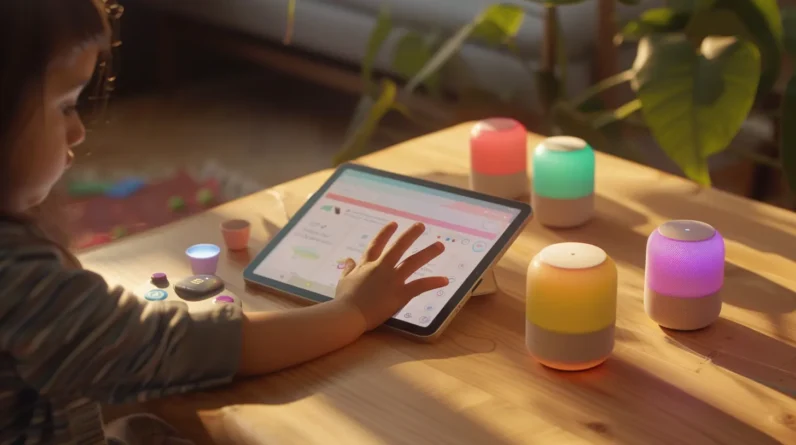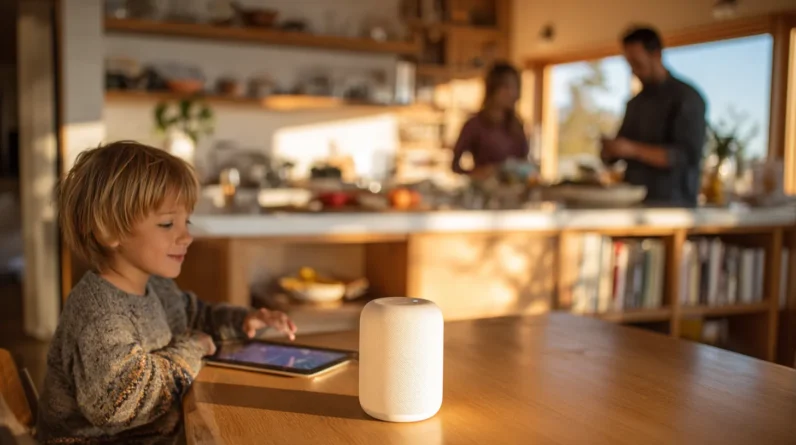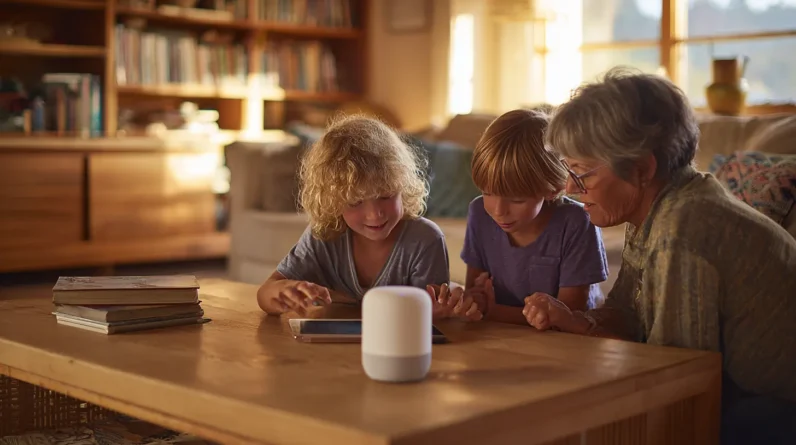



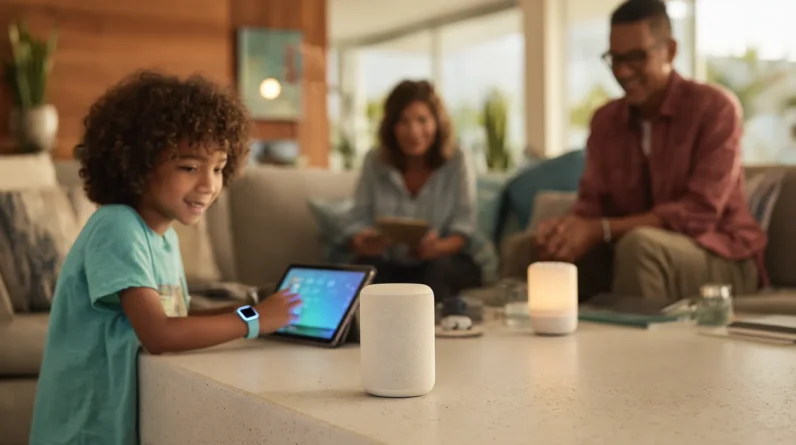
We can use smart devices to balance our kids’ learning and independence with safety. Voice-controlled speakers build study routines hands-free, while GPS watches let them explore with our peace of mind. Educational tablets adapt to each child’s pace, and family apps keep everyone coordinated. The key’s setting up strong parental controls and modeling healthy habits ourselves. There’s much more to understand about making these tools work best for your family’s needs.
Smart Speakers: Learning Companions and Routine Helpers
When we’re juggling bedtimes, homework, and household tasks, smart speakers can lighten the load by helping our kids learn and stay organized. Voice controlled commands let children request educational content, set reminders for assignments, and access age-appropriate information independently. We’ve found that ambient soundscapes—from rainfall to forest sounds—help create calming environments during study sessions or wind-down periods.
Smart speakers support routine establishment through consistent verbal cues, which research shows strengthens habit formation in children. Kids can ask for math problems, spelling practice, or story time without parental intervention. The hands-free nature reduces screen time while maintaining engagement. When implemented thoughtfully, these devices become genuine learning partners that respect developmental needs while freeing us to focus on what matters most.
Wearable Devices and Location Trackers for Peace of Mind
Beyond the home environment where smart speakers help our kids learn and stay organized, we’re often managing their safety during school pickups, after-school activities, and independent outings. Wearable devices and location trackers provide real-time visibility into our children’s whereabouts, complementing broader home security systems for all-encompassing family protection.
Consider these practical options:
- GPS smartwatches – Enable two-way calling, location tracking, and geofencing alerts when kids leave designated areas
- AirTag-style trackers – Attach to backpacks or shoes for affordable, crowd-sourced location services
- Personal emergency devices – Offer one-button SOS features connecting directly to parents or emergency services
We’re balancing independence with security. Research shows kids benefit from autonomy while parents gain confidence. These tools won’t replace supervision, but they’re valuable safety layers for our increasingly mobile families.
Educational Tablets and Interactive Learning Tools
As our kids grow and their learning needs evolve, educational tablets and interactive learning tools become powerful extensions of traditional education. These devices offer personalized lesson plans that adapt to each child’s pace and learning style, ensuring they’re neither bored nor overwhelmed.
We’re witnessing remarkable engagement when children explore virtual field trips to museums, historical sites, and ecosystems without leaving home. This immersive approach deepens comprehension and sparks curiosity across subjects.
Quality educational apps combine gamification with rigorous content, making mastery feel achievable. Our kids develop critical thinking and problem-solving skills while we monitor progress through built-in analytics.
When we’re intentional about app selection and screen time boundaries, tablets become legitimate learning partners that complement classroom instruction and foster independent discovery.
Family Organization Apps That Keep Everyone Connected
While educational tablets equip our children with knowledge and skills, organizing the logistics of family life—schedules, chores, permissions, and communication—requires its own set of digital tools.
We’ve found that strategic digital organization strengthens family coordination and reduces conflict:
- Family calendars sync everyone’s commitments across devices, eliminating double-bookings and missed activities while giving kids visibility into household rhythms.
- Shared to do lists assign age-appropriate responsibilities, building accountability and independence while keeping parents informed about completion status.
- Unified messaging platforms consolidate communications, reducing scattered texts and emails while establishing clear channels for time-sensitive updates.
These apps transform chaotic household management into transparent systems where children understand expectations and contribute meaningfully. When families implement these tools consistently, they report decreased stress and improved collaborative problem-solving among members.
Safety Features and Screen Time Balance You Need to Know
The digital tools that help our families stay organized and connected also require thoughtful safeguards—because smart devices can expose children to inappropriate content, excessive usage, and privacy risks if we don’t set boundaries. We’ve found that robust parental controls are essential. Modern devices let us filter content, set screen time limits, and monitor app usage directly. For online safety, we should enable two-factor authentication, review privacy settings regularly, and teach kids about data sharing.
Research shows balanced screen time—typically one to two hours daily for school-age children—supports better sleep and development. We’re most effective when we model healthy device habits ourselves and maintain open conversations about what our children encounter online. These practices create safer digital environments while preserving technology’s genuine benefits.
Conclusion
Smart devices aren’t magic wands, but they’re powerful tools we can use thoughtfully. When we prioritize our children’s safety and learning while managing screen time, we’re building a strong foundation for their digital lives. We’ve explored speakers that structure routines, trackers that ease our worries, and apps that organize chaos. The key? We stay intentional. Smart technology works best when we guide it toward our family’s values and needs.