


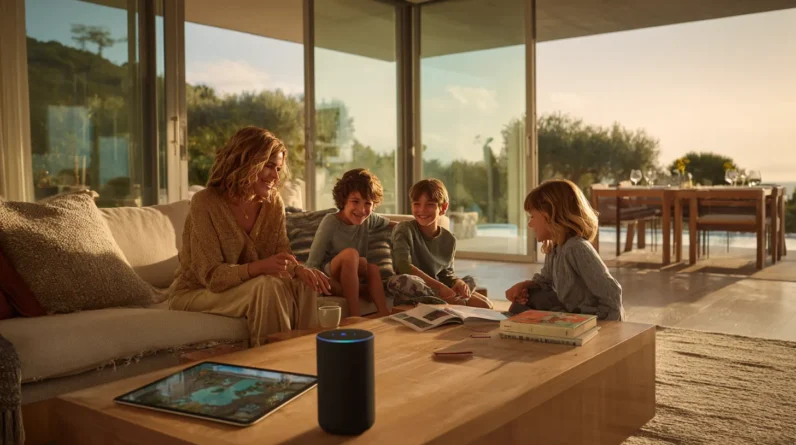
We’re discovering that smart devices enhance family time when they’re designed for connection rather than isolation. Interactive gaming systems get everyone moving and communicating together. Smart speakers enable shared learning experiences, while wearables transform wellness into collaborative goals. Video calling tools maintain relationships across distances, and home hubs synchronize schedules so we’re all on the same page. The key’s finding devices that bring us closer—and there’s plenty more to explore about which ones work best for your family.
Interactive Gaming Systems That Bring Families Together
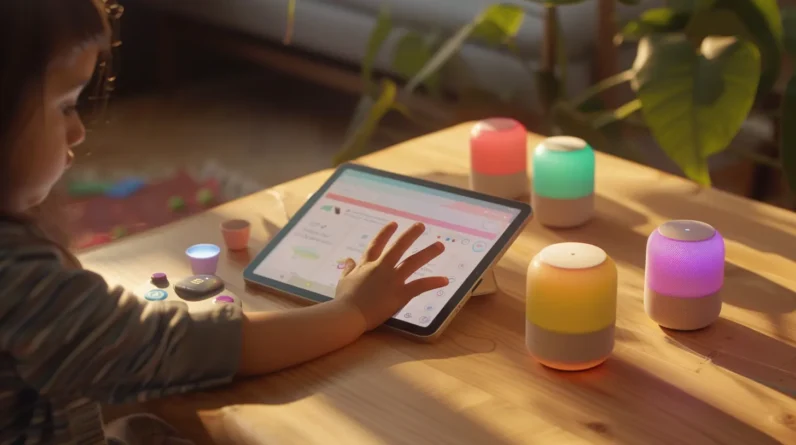
Interactive gaming systems have evolved to foster genuine connection among family members across different ages and abilities. We’re discovering that tabletop gaming consoles create inclusive environments where everyone participates meaningfully. Motion sensing game controllers enable active, full-body engagement that keeps children developmentally stimulated while encouraging parents to join the fun.
We’ve observed that these systems strengthen family bonding through collaborative gameplay. Rather than passive screen time, interactive gaming requires communication, problem-solving, and shared decision-making. The physical activity component supports children’s motor skill development while promoting healthier entertainment habits.
What makes these platforms particularly effective is their accessibility. We can adjust difficulty levels, customize game rules, and select age-appropriate content. Families report improved interaction quality and sustained engagement across multiple generations. When we prioritize intentional gaming choices, we’re investing in authentic connection.
Smart Speakers and Displays for Shared Learning and Entertainment
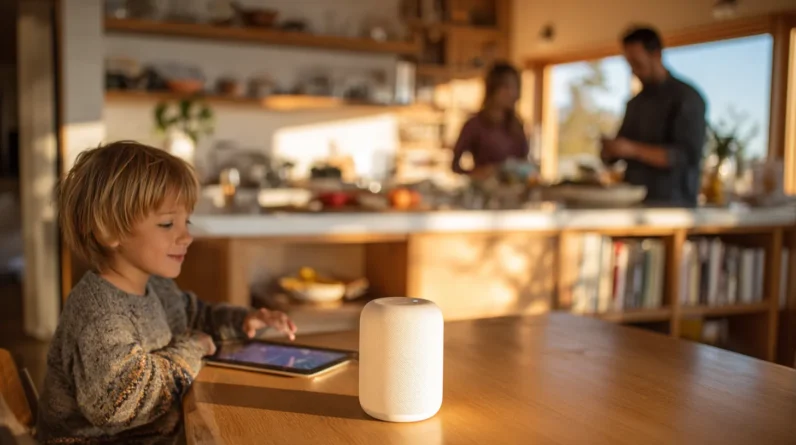
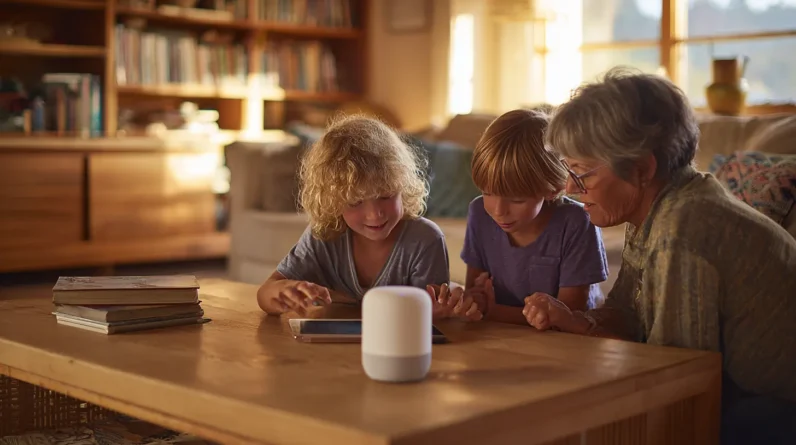
Smart speakers and displays extend family connection beyond gaming by creating shared spaces for learning and entertainment. We’ve discovered that AI powered story time engages children’s imagination while parents participate actively in their development. These devices facilitate bedtime routines through ambient sound machines, which research shows improve sleep quality for kids across developmental stages. Voice-activated learning tools enable us to access educational content together, promoting literacy and curiosity. Interactive displays support collaborative activities—from cooking lessons to virtual museum tours—strengthening family bonds while building knowledge. We’re leveraging technology to create intentional moments where screen time serves developmental purposes rather than passive consumption. Smart speakers and displays become family anchors, facilitating connection through purposeful, age-appropriate content that grows with our children’s needs and interests.
Wearable Devices That Track Wellness Goals as a Family
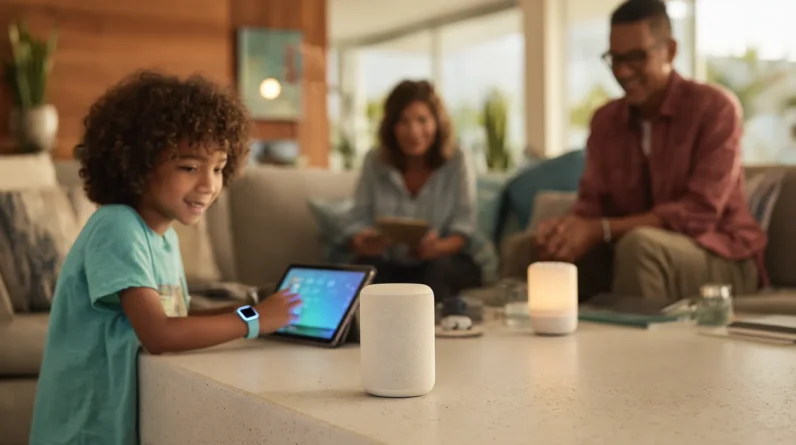
How can we help our children develop healthy habits that last a lifetime? Wearable devices designed for families offer practical solutions through engaging family fitness challenges that motivate collective participation. These devices track steps, sleep quality, and activity levels while displaying health data visualization in formats children understand and find compelling.
When we share wellness goals across the family unit, we model accountability and normalize health monitoring. Kids observe that fitness isn’t punishment but a valued family priority. The real-time feedback from wearables helps children aged 8+ understand cause-and-effect relationships between choices and outcomes.
We’re creating sustainable behavioral change by making wellness visible, achievable, and collaborative. These tools transform abstract health concepts into concrete, measurable progress that resonates with developing minds.
Video Calling and Connection Tools for Long-Distance Relationships
When grandparents live across the country or a parent travels for work, video calling bridges the distance in ways that strengthen family bonds.
| Platform | Key Features | Best For |
|---|---|---|
| Google Meet | Screen sharing, group calls | Remote family events |
| Marco Polo | Asynchronous messaging | Flexible scheduling |
| Zoom | Recording capabilities | Documentation |
| FaceTime | Seamless integration | Apple ecosystems |
| Facebook Portal | Hands-free mode | Quick check-ins |
We’ve found that scheduled video sessions create consistent touchpoints for children with distant relatives. Virtual scrapbook sharing during calls—displaying photos, artwork, or memories—deepens engagement beyond passive watching. These interactions support children’s social-emotional development by reinforcing relational continuity and belonging.
Asynchronous tools complement synchronous calls, accommodating different time zones and schedules. When we intentionally structure these digital connections with purpose, they become meaningful family rituals that transcend physical separation.
Smart Home Hubs That Simplify Family Organization and Routines
Because families juggle multiple schedules, activities, and responsibilities, centralized command centers help us coordinate daily life more effectively. Smart home hubs integrate digital calendars for family coordination, allowing us to view everyone’s commitments simultaneously and reduce scheduling conflicts. These systems also manage connected appliances for household chores, enabling us to automate routine tasks and teach children responsibility through assigned duties.
- Synchronized scheduling: View all family events in one location, reducing missed appointments and double-bookings
- Automated reminders: Receive voice alerts for homework, meals, and activities tailored to each child’s age
- Task delegation: Assign and track chores through visual interfaces, fostering accountability and life skills
- Unified communication: Send messages and updates across the family network, keeping everyone informed during the day
Conclusion
We’ve explored how smart devices can revolutionize family bonding—if we’re honest about what that means. Sure, gaming systems unite us around screens, speakers educate while we multitask, and wearables track our wellness obsessions. But here’s the truth: these tools work best when they’re supplements, not replacements, for genuine connection. They’re most valuable when we’re intentional about unplugging too. Technology enhances family time; it doesn’t create it.