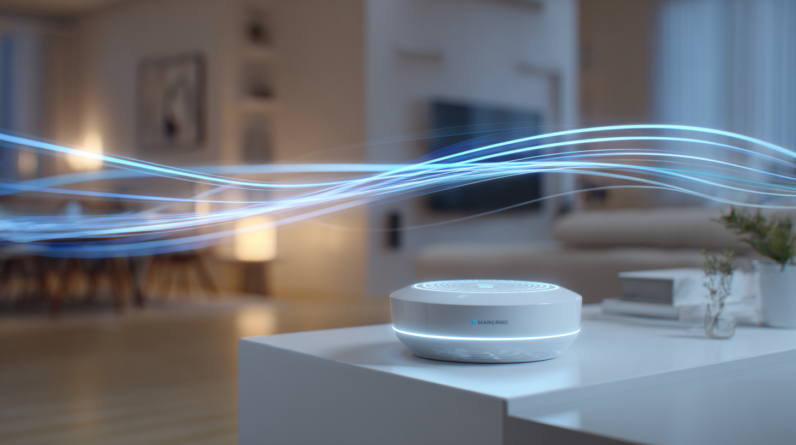




We’re entering an era where our devices anticipate our needs rather than simply responding to commands. AI-powered systems now learn our preferences, optimize our environments, and make decisions on our behalf—from managing home energy to monitoring health metrics in real time. Yet this intelligence demands transparency and robust security to protect our behavioral data. The challenge we’re facing: balancing innovation with ethical responsibility. Understanding how to calibrate this emerging relationship between humans and machines will shape our digital future.
The Evolution of Artificial Intelligence in Consumer Technology
Since AI’s emergence from academic laboratories into everyday devices, we’ve witnessed a fundamental shift in how technology serves us. We’re now traversing an era where machine learning algorithms power our smartphones, smart speakers, and connected appliances, anticipating our needs with unprecedented precision.
However, this advancement demands we address critical challenges. Data Security remains paramount—we’re entrusting intimate behavioral patterns to systems that require robust protection against breaches. Equally important is Algorithm Transparency; we’re insisting that AI systems explain their decision-making processes rather than operating as impenetrable black boxes.
We’re reshaping consumer expectations around intelligent technology. The next generation won’t merely tolerate smart devices; they’ll demand accountability. Our industry’s credibility hinges on balancing innovation with ethical responsibility, ensuring AI genuinely enhances human autonomy rather than compromising it.
IoT Networks: Creating Seamless Device Communication
The proliferation of connected devices has transformed our homes, workplaces, and cities into intricate ecosystems where seamless communication isn’t a luxury—it’s a necessity. We’re architecting IoT networks that enable unprecedented interoperability across disparate platforms and manufacturers.
Network Optimization remains central to our strategy, ensuring minimal latency and maximum throughput as data flows between billions of interconnected endpoints. We’re implementing edge computing architectures that process information closer to its source, reducing bandwidth strain and response times.
Device Security has become non-negotiable within this expanding landscape. We’re embedding cryptographic protocols and authentication mechanisms directly into firmware, creating resilient barriers against increasingly sophisticated threats.
These advancements position us to deliver intelligent ecosystems where devices anticipate user needs, optimize resource allocation autonomously, and communicate with unprecedented efficiency.
Wearable Innovations and Real-Time Health Monitoring
Building on our foundational IoT infrastructure, we’re now channeling seamless device communication into personal health ecosystems where wearables serve as continuous biological sensors. Advanced biometric sensors embedded in smartwatches and fitness trackers capture real-time data—heart rate variability, oxygen saturation, sleep patterns, and stress levels—enabling predictive health interventions before symptoms manifest.
These personal trackers don’t merely record metrics; they’ve evolved into intelligent systems that learn individual baselines and detect anomalies. Machine learning algorithms analyze patterns across millions of users, identifying early indicators of cardiovascular issues, respiratory problems, and metabolic disorders.
We’re witnessing healthcare’s democratization through wearable technology. Individuals now possess clinical-grade monitoring capabilities previously confined to hospitals, empowering proactive wellness management and informed medical decisions.
Smart Home Systems That Learn and Adapt
As our health ecosystems collect intimate behavioral data through wearables, we’re extending that same adaptive intelligence into our living spaces—where smart home systems now learn occupant preferences and environmental patterns to optimize comfort, energy efficiency, and security simultaneously.
These systems employ machine learning algorithms that refine themselves through continuous interaction:
- Thermal management adapts heating and cooling based on occupancy patterns and weather forecasting
- Lighting adjusts color temperature and intensity aligned with circadian rhythms and daily routines
- Appliance sequencing prevents grid overload while minimizing energy consumption
Robust device security frameworks encrypt behavioral data locally, preventing unauthorized access. Granular personalization options let users calibrate learning boundaries—determining which systems adapt autonomously versus requiring explicit authorization. We’re witnessing infrastructure that anticipates needs rather than merely responds to commands.
The Future of Human-Device Interaction and Decision-Making
While smart systems increasingly anticipate our needs, we’re approaching a critical juncture where devices must decide how much autonomy they should exercise on our behalf. Voice commands and virtual assistants will evolve beyond simple request fulfillment, becoming collaborative decision-makers that understand context, preferences, and ethical boundaries.
We’ll see interfaces shift from reactive to predictive, where devices propose actions rather than await instructions. However, this demands transparency—we need clear visibility into how devices process information and justify recommendations. The challenge lies in balancing convenience against control, ensuring autonomy doesn’t compromise agency.
Future interaction models will require sophisticated consent frameworks, allowing users to calibrate delegation levels across different domains. Success depends on designing systems that respect human judgment while amplifying our capabilities, creating genuine partnerships rather than mere convenience.
Conclusion
We’re witnessing technology that’s fundamentally reshaping how we live. From AI-powered systems to interconnected IoT networks, smart devices now anticipate our needs before we recognize them ourselves. Wearables monitor our health continuously while homes adapt to our preferences in real time. But here’s what we must consider: as these devices become increasingly intelligent, are we prepared for the profound changes they’ll bring to our daily existence? The future’s arriving faster than we think.