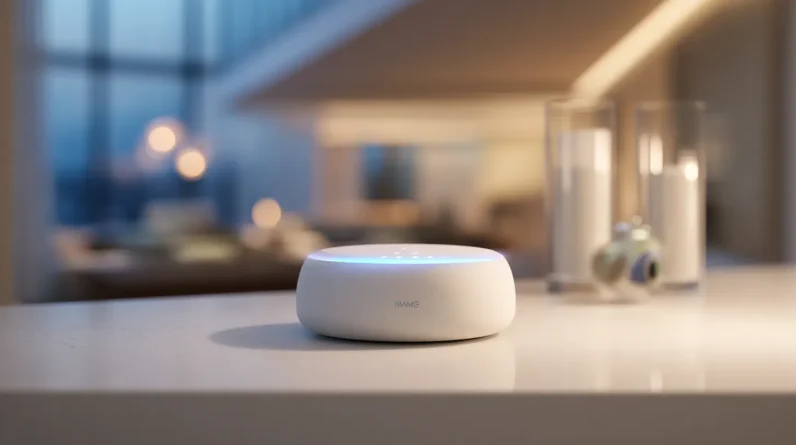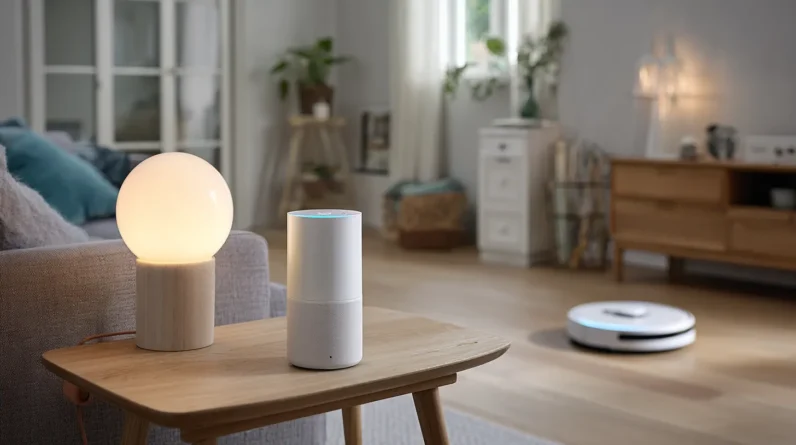




We’ve moved beyond basic connectivity—smart devices now learn your patterns through advanced sensors, AI algorithms, and seamless ecosystem integration. They anticipate your needs, adapt to your lifestyle, and communicate across interconnected systems for unified automation. Voice and gesture recognition offer hands-free control, while edge computing processes commands locally for privacy. Real-time optimization balances comfort with energy efficiency. The sophistication lies in how these technologies converge to create truly intelligent systems that evolve with you.
Connectivity: The Foundation of Intelligence
We’re witnessing a fundamental shift in how devices communicate and operate. Smart devices rely on robust wireless protocols—Wi-Fi, Bluetooth, and emerging standards like Matter—to create seamless ecosystems. These protocols determine how quickly and reliably your devices share data.
Network topology shapes everything. Mesh networks enable devices to relay signals through each other, expanding coverage and reliability. This distributed approach beats traditional hub-and-spoke models for resilience.
We’re seeing the industry converge toward unified standards that reduce fragmentation. Smart devices now prioritize low-power connectivity to extend battery life while maintaining responsiveness. Understanding these foundational technologies helps you evaluate which devices truly deserve space in your connected home.
Sensors and Data Collection: How Smart Devices Learn
At the heart of every smart device sits a constellation of sensors that transform raw environmental data into actionable intelligence. We’re harnessing accelerometers, gyroscopes, and thermal sensors to build contextual awareness that anticipates your needs.
Here’s how we’re collecting and leveraging data:
- Motion detection enables predictive responses before you act
- Environmental monitoring captures temperature, humidity, and air quality in real-time
- Proximity sensing triggers location-based automations seamlessly
- Biometric data powers personalized recommendations tailored to individual patterns
- Usage analytics refine machine learning models continuously
We’re moving beyond reactive gadgets toward proactive intelligence. Each data point we collect feeds sophisticated algorithms that learn your preferences, habits, and lifestyle patterns. This sensor fusion creates the contextual awareness that distinguishes truly smart devices from ordinary electronics, delivering experiences genuinely customized to you.
Artificial Intelligence and Adaptive Behavior
The sensors we’ve discussed feed machine learning algorithms that don’t just respond to your commands—they learn from them. These systems analyze patterns in your behavior, identifying preferences you might not consciously recognize. Through predictive analytics, smart devices anticipate your needs before you articulate them.
Consider your smart thermostat. It observes temperature adjustments, time patterns, and occupancy data, then forecasts ideal settings for comfort and efficiency. This adaptive behavior represents true intelligence—the device evolves based on your household’s unique rhythm.
We’re witnessing AI that transcends static programming. Your smart home doesn’t execute predetermined responses; it models your lifestyle and adjusts dynamically. This sophisticated feedback loop between sensors, algorithms, and actions distinguishes genuine smart devices from merely connected gadgets, delivering personalized experiences that genuinely improve daily life.
Voice and Gesture Recognition: Hands-Free Control
Because typing and tapping feel increasingly antiquated, voice and gesture recognition have become the primary interfaces through which we’re commanding our smart devices. We’re leveraging sophisticated natural language processing to execute personalized voice commands that adapt to our unique speech patterns and preferences.
Key advancements we’re witnessing:
- Neural voice models capturing individual accent and dialect nuances
- Contextual gesture triggers responding to micro-movements and spatial positioning
- Multi-modal fusion combining voice, gesture, and environmental data simultaneously
- Low-latency processing delivering real-time responsiveness under 100 milliseconds
- Privacy-first architecture processing commands locally rather than cloud-dependent
We’re achieving unprecedented control fluidity. Smart devices now understand conversational context, disambiguate intent from ambiguous commands, and execute complex sequences through gesture sequences alone. This paradigm shift eliminates friction points, enabling seamless interaction that feels genuinely intuitive rather than mechanically programmed.
Seamless Device Integration and Automation
Voice and gesture commands represent just the beginning of smart device sophistication—what truly amplifies their value is how seamlessly they orchestrate across our entire digital ecosystem. Cross-device syncing enables your preferences, schedules, and data to flow effortlessly between smartphones, tablets, wearables, and home systems. We’re witnessing intelligent automation that learns our patterns and delivers proactive recommendations before we realize we need them.
Smart devices now anticipate our next move—suggesting routes based on calendar events, adjusting climate control before we arrive home, or queuing content we’d enjoy. This interconnectedness transforms fragmented gadgets into unified platforms. The convergence of AI, cloud integration, and edge computing creates environments where devices communicate intelligently. We’re no longer managing individual tools; we’re orchestrating expansive ecosystems that predict, adapt, and respond to our lifestyle demands with remarkable precision and efficiency.
Energy Efficiency and Real-Time Optimization
Smart devices aren’t just responsive—they’re becoming energy-conscious partners that actively reduce our consumption while maintaining peak performance. Through sophisticated power management systems and real-time data aggregation, we’re witnessing a fundamental shift in how technology operates within our homes.
Our devices now intelligently optimize energy use by:
- Monitoring consumption patterns across multiple connected systems
- Adjusting operational parameters based on usage trends
- Predicting peak demand and redistributing loads efficiently
- Integrating renewable energy sources seamlessly
- Learning household schedules to minimize standby drain
We’re leveraging machine learning algorithms that analyze aggregated data to anticipate our needs before we voice them. This proactive approach means we’re not just saving energy—we’re fundamentally transforming our relationship with power consumption, making sustainability an inherent feature rather than an afterthought.
Conclusion
We’re witnessing smart devices evolve into essential ecosystem components that anticipate our needs like a conductor orchestrating an orchestra. Their intelligence stems from interconnected sensors, AI algorithms, and seamless integrations that constantly adapt and optimize. Voice control and gesture recognition eliminate friction, while energy efficiency becomes non-negotiable. We’re not just adopting gadgets—we’re building personalized, responsive environments that learn and improve with every interaction.