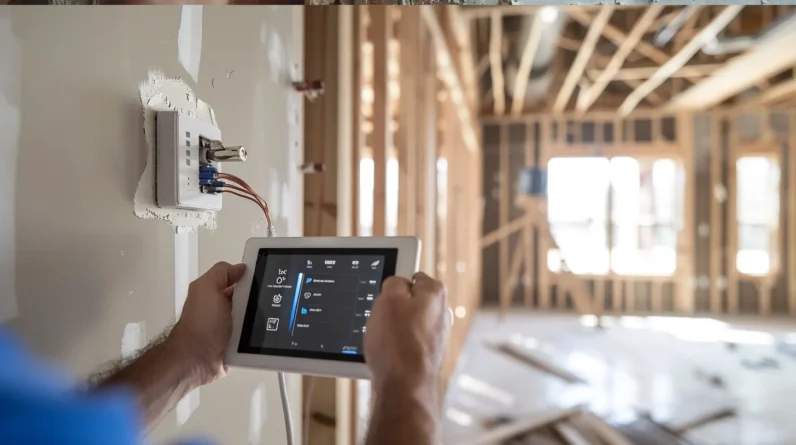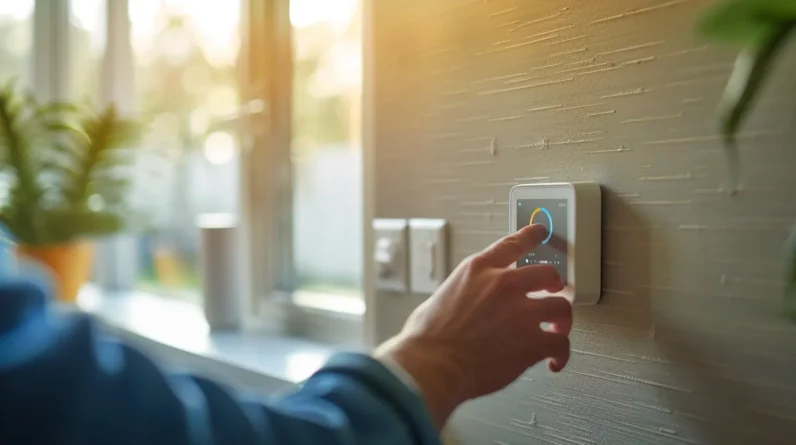



We’ve embedded predictive analytics and machine learning into modern smart devices so they learn your patterns and automatically shift operations to cheaper energy windows. Real-time monitoring captures environmental data across Wi-Fi, Bluetooth, and LoRaWAN networks, while load balancing prevents overloads by distributing energy efficiently. 5G connectivity and edge computing enable instantaneous device communication with minimal latency. Natural language processing lets you control everything conversationally. The Matter Protocol unifies device compatibility, and Thread networking creates self-healing mesh architecture. Together, these technologies deliver up to 30% energy savings—and there’s considerably more innovation beneath the surface.
Automatic Energy Optimization Through AI Learning
As smart home technology evolves, we’re witnessing a fundamental shift in how households manage energy consumption through artificial intelligence. Modern systems leverage predictive analytics to forecast your household’s energy needs by analyzing historical usage patterns and real-time data. Machine learning algorithms continuously adapt, learning your behavioral patterns and automatically scheduling appliances during cheaper energy windows. These systems integrate with smart thermostats, HVAC units, and water heaters, optimizing operation based on occupancy, weather conditions, and electricity tariffs. The result? Quantifiable energy savings—up to 30% reduction in energy costs through intelligent building management. By combining anticipatory forecasting with dynamic device automation, we’re achieving unprecedented efficiency gains while maintaining comfort and convenience without requiring manual intervention.
Real-Time Monitoring and Load Balancing Systems
Building on AI’s predictive capabilities, real-time monitoring and load balancing systems represent the next evolution in smart home intelligence. We’re integrating continuous sensor data streams with dynamic system adjustments that optimize performance instantaneously.
Our monitor systems capture environmental metrics—temperature, humidity, energy consumption—transmitting data through Wi-Fi, Bluetooth, and LoRaWAN networks. This immediate visibility enables us to balance operations by:
- Adjusting pipeline flow and equipment performance based on real-time demand fluctuations
- Distributing energy efficiently across interconnected devices to prevent overloads
- Scheduling predictive maintenance before system imbalances occur
We’ve eliminated lag between detection and response. When anomalies emerge, instant alerts via text or email trigger intervention before problems escalate. Dashboards provide granular control, transforming reactive troubleshooting into proactive asset management. This convergence of real-time awareness and intelligent automation substantially reduces downtime while maximizing operational efficiency.
5G Connectivity for Instantaneous Device Communication
While real-time monitoring systems demand immediate data transmission, they’re fundamentally constrained by network speed—which is precisely where 5G transforms smart home architecture. We’re leveraging low latency and high bandwidth to enable instantaneous device communication across interconnected ecosystems.
| Feature | 4G Capability |
|---|---|
| Latency | 50ms average |
| Peak Speed | 1 Gbps |
| IoT Support | Limited |
| Device Density | Moderate |
| Edge Processing | Minimal |
| 5G Capability | |
| 1ms or lower | |
| 100+ Gbps | |
| Native integration | |
| Massive scaling | |
| Exhaustive | |
5G’s architecture eliminates transmission delays through edge computing, processing data closer to source devices. We’re deploying this infrastructure to support autonomous vehicles, remote surgery, and synchronized smart home operations. The combination of reduced latency and expanded bandwidth allows us to scale IoT deployments without performance degradation, fundamentally reshaping how interconnected devices communicate.
Natural Language Processing and Context-Aware Interactions
Natural language processing fundamentally transforms how we interact with smart devices—moving beyond rigid command structures to intuitive, conversational exchanges. We’re witnessing voice assistants and smart speakers evolve into genuinely context-aware systems that interpret nuance rather than just keywords.
Here’s what’s driving this transformation:
- Contextual interpretation: Smart speakers decode environmental cues and spoken references, adjusting thermostats or security systems with semantic understanding rather than literal command matching
- Sentiment analysis: NLP detects emotionality in speech, enabling devices to understand intent beyond surface-level requests
- Multi-device orchestration: Single commands like “good night” trigger coordinated responses across your ecosystem—lights dimming, thermostats adjusting, security activating simultaneously
We’ve moved from command-based interfaces to dialogue-driven experiences. Voice assistants now combine NLP with machine learning, delivering responses tailored to individual contexts and preferences. This shift represents genuine progress toward seamless human-device interaction.
Intelligent Kitchen Automation and Smart Appliances
The same intelligent processing that enables our voice assistants to understand context now powers the appliances in our kitchens, transforming routine cooking and food storage into automated, responsive experiences. We’re witnessing smart kitchens evolve beyond connectivity into genuine automation ecosystems where intelligent appliances communicate and adapt in real-time.
| Feature | Technology | Benefit |
|---|---|---|
| Soil Sensors | Load Detection | Optimized water usage |
| Temperature Probes | Auto-Adjustment | Precision cooking outcomes |
| AI Food Management | Expiration Tracking | Reduced spoilage |
| Auto-Dosing Systems | Exact Dispensing | Minimal detergent waste |
| Pan Detection | Automatic Shutoff | Fuel conservation |
We’re leveraging AI-enhanced systems that learn our habits, enabling personalized efficiency. Voice integration with Alexa and Google Assistant streamlines operation, while remote monitoring apps provide energy tracking and maintenance alerts. This convergence of sensors, automation, and connectivity positions smart kitchens as cornerstone technologies for sustainable living.
Matter Protocol and Universal Device Compatibility
As smart home ecosystems have proliferated, we’ve faced a persistent challenge: devices from different manufacturers rarely communicate seamlessly. The Matter Protocol solves this by establishing a unified standard for device interoperability across Wi-Fi, Ethernet, and Thread networks.
We’re witnessing a fundamental shift in how smart homes operate:
- Seamless multi-platform control enables single devices to work simultaneously with Apple Home, Google Home, and Amazon Alexa without bridges or adapters
- Local-first architecture processes commands locally using IPv6, eliminating internet dependency for core functions while protecting privacy
- Standardized certification guarantees compatibility across manufacturers, removing ecosystem lock-in permanently
This IP-based foundation future-proofs your setup while multi-admin support lets us control devices from multiple platforms instantly. The simplified QR code onboarding mirrors Bluetooth pairing, reducing technical friction. We’re finally achieving the interoperable smart home we’ve needed.
Thread-Based Networking for Enhanced Performance and Reliability
While Matter establishes the communication standards that let our devices talk across platforms, Thread provides the underlying network backbone that makes those conversations fast and reliable. We’re leveraging an IPv6-based mesh networking architecture operating on IEEE 802.15.4 standard, enabling self-healing networks that automatically reconfigure when devices fail or join. This means we’re eliminating single points of failure—our systems sustain functionality across multiple hops and over 250 connected devices. Device security remains paramount; we’re implementing AES encryption and requiring authorization for new devices joining Thread networks. Battery-operated endpoints consume minimal power while participating fully in the mesh. The result: low-latency responses, redundant pathways ensuring delivery reliability, and networks that adapt dynamically to maintain ideal conditions.
Conclusion
We’re orchestrating a symphony where AI learns our rhythms, 5G conducts instantaneous conversations, and Matter’s universal language lets every instrument play in harmony. Thread weaves the ensemble together, while real-time monitoring keeps each performer perfectly balanced. Your home’s now a living organism—breathing efficiency, adapting intelligently, communicating seamlessly. We’ve built intelligence into the infrastructure itself, making today’s smart devices not just responsive, but genuinely prescient.