


We’ll help you set up bedroom smart devices by first identifying what disrupts your sleep—temperature, light, or noise. Position routers at least six feet from your bed and keep phones across the room to minimize electromagnetic exposure and notifications. Program automation routines that dim lights two hours before bedtime and lower temperatures to 65-68°F. Isolate bedroom devices on a dedicated network with strong passwords and two-factor authentication. When issues arise, document error messages and reset devices methodically. Understanding these foundational steps positions you to build a genuinely restful sleep environment.
Choose Smart Devices That Match Your Sleep Priorities
Foundation matters—before you invest in smart bedroom devices, you’ll want to identify what actually disrupts your sleep. We’re talking specific pain points: temperature fluctuations, light exposure, noise, or sleep tracking gaps.
Once you’ve pinpointed your priorities, evaluate device options systematically. Smart selections depend on your particular needs. If temperature’s your issue, a smart thermostat with scheduling capabilities delivers precision control. Light sensitivity? Consider smart blinds with automation or a sunrise alarm. Noise problems warrant smart white noise machines with app integration.
We recommend evaluating compatibility across your ecosystem—ensure devices communicate seamlessly. Review power requirements and placement logistics before purchasing. Match each device directly to a quantifiable sleep obstacle, eliminating guesswork. This targeted approach maximizes effectiveness while minimizing unnecessary complexity in your bedroom environment.
Position Devices to Minimize Distractions and Electromagnetic Exposure
Smart devices offer tangible sleep improvements, but their physical placement can either amplify or undermine those benefits. We’ll strategically position our devices to optimize both comfort and health.
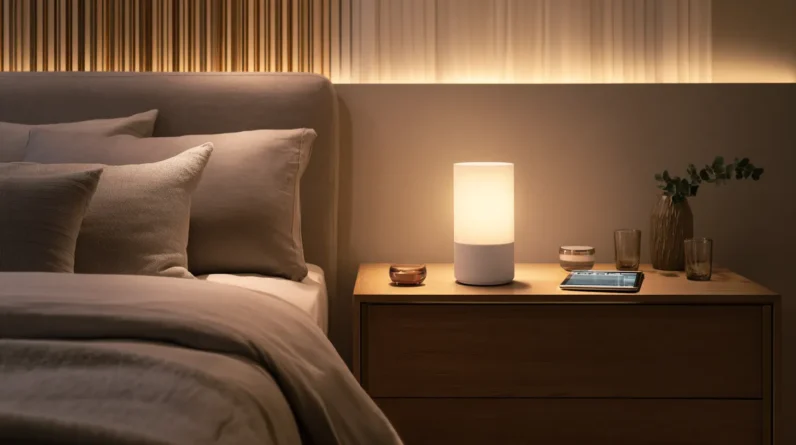
For electromagnetic safety, we’ll place routers and wireless hubs at least six feet from our bed. Device placement should keep screens outside our direct line of sight to reduce visual distractions and blue light exposure. We’ll position smart speakers on nightstands away from our head rather than directly beside pillows.
Mount charging cables and power adapters away from sleeping areas when possible. Keep phones on airplane mode or across the room during sleep. This strategic device placement minimizes electromagnetic exposure while preventing notification-driven awakenings. We’re creating an environment where technology genuinely supports, rather than sabotages, our sleep quality and recovery.
Create Automation Routines That Support Your Sleep Cycle
Once we’ve positioned our devices for minimal distraction, we can leverage automation to actively synchronize our bedroom environment with our circadian rhythms. We’ll create schedules that dim lights progressively two hours before bedtime, signaling melatonin production. Smart thermostats should lower temperatures to 65-68°F, optimizing sleep physiology.
We’ll integrate relaxation techniques through automated audio triggers—nature sounds or white noise initiating at preset times. Our sleep schedule benefits from consistent automation: lights activate gradually at wake time, temperature rises, and blackout shades open incrementally.
We can program cascading routines that silence notifications, reduce blue light emission, and trigger calming ambient conditions. This orchestrated environment actively supports our natural sleep-wake cycle rather than fighting it, enabling deeper, more restorative sleep through intentional environmental control.
Connect Safely Without Compromising Bedroom Privacy
While we’ve optimized our bedroom environment through automation, we can’t ignore the security vulnerabilities that come with connected devices. Device security requires deliberate configuration choices to protect sensitive spaces.
Start by isolating bedroom devices on a dedicated network segment, separate from computers storing financial or personal data. We’ll implement strong authentication—unique, complex passwords and two-factor verification for all accounts. Disable remote access features we don’t actively use; manufacturers often enable these by default.
Regular firmware updates patch known vulnerabilities, so we’ll schedule monthly checks across all devices. We’ll also review privacy settings carefully, disabling cloud storage or data collection features unnecessary for core functionality.
Network configuration demands we disable Universal Plug and Play protocols that could expose devices to unauthorized access. These strategic measures maintain privacy without sacrificing automation benefits.
Troubleshoot Common Setup Problems Before They Disrupt Your Rest
Despite our careful planning and security measures, connectivity issues, configuration conflicts, and device incompatibilities will inevitably arise. We’ll tackle these systematically to restore bedroom tranquility.
Start by documenting error messages precisely—they’re diagnostic gold. Cross-reference codes against manufacturer databases. Reset devices to factory settings, then reconfigure methodically. Verify Wi-Fi signal strength; weak connectivity causes cascading failures.
Check device calibration settings. Many smart devices require environmental calibration for top-notch performance. Guarantee firmware’s current across all equipment. Version mismatches frequently trigger incompatibilities.
Isolate problems by testing devices individually on your network. If one fails while others succeed, that device needs replacement or professional support. Document your setup process. We’re building a troubleshooting reference for future issues. This systematic approach prevents recurring disruptions and maintains the sanctuary your bedroom should be.
Conclusion
We’ve covered how to strategically deploy smart bedroom devices that enhance sleep without compromising rest quality. By aligning your tech choices with sleep priorities, optimizing placement, automating routines, securing connections, and resolving setup issues proactively, you’re creating an environment where devices support rather than disrupt your sleep cycle. We recommend testing configurations gradually, monitoring electromagnetic exposure, and adjusting settings based on your sleep patterns for ideal results.